Murdered at the Hands of His Family

Week 31 of Amy Johnson Crow’s 52 Ancestors

     On the 3rd day of April in the year 1890, a murder took place in the Widener family. It happened just after sunset on a Thursday evening.[1] Isaac Widener was the brother of my great-great-great grandfather, William Butler Widener, and was brutally murdered at the hands of his own family.[2]

     Isaac Widener was born about 1830 in South Carolina.[3] He married Sarah Jane Bowman in Jackson County, Georgia on 15 September 1852.[4] Sarah was born about 1838 in Georgia[5] and died 1895 in the State Penitentiary, Little Rock, Pulaski County, Arkansas.[6]  

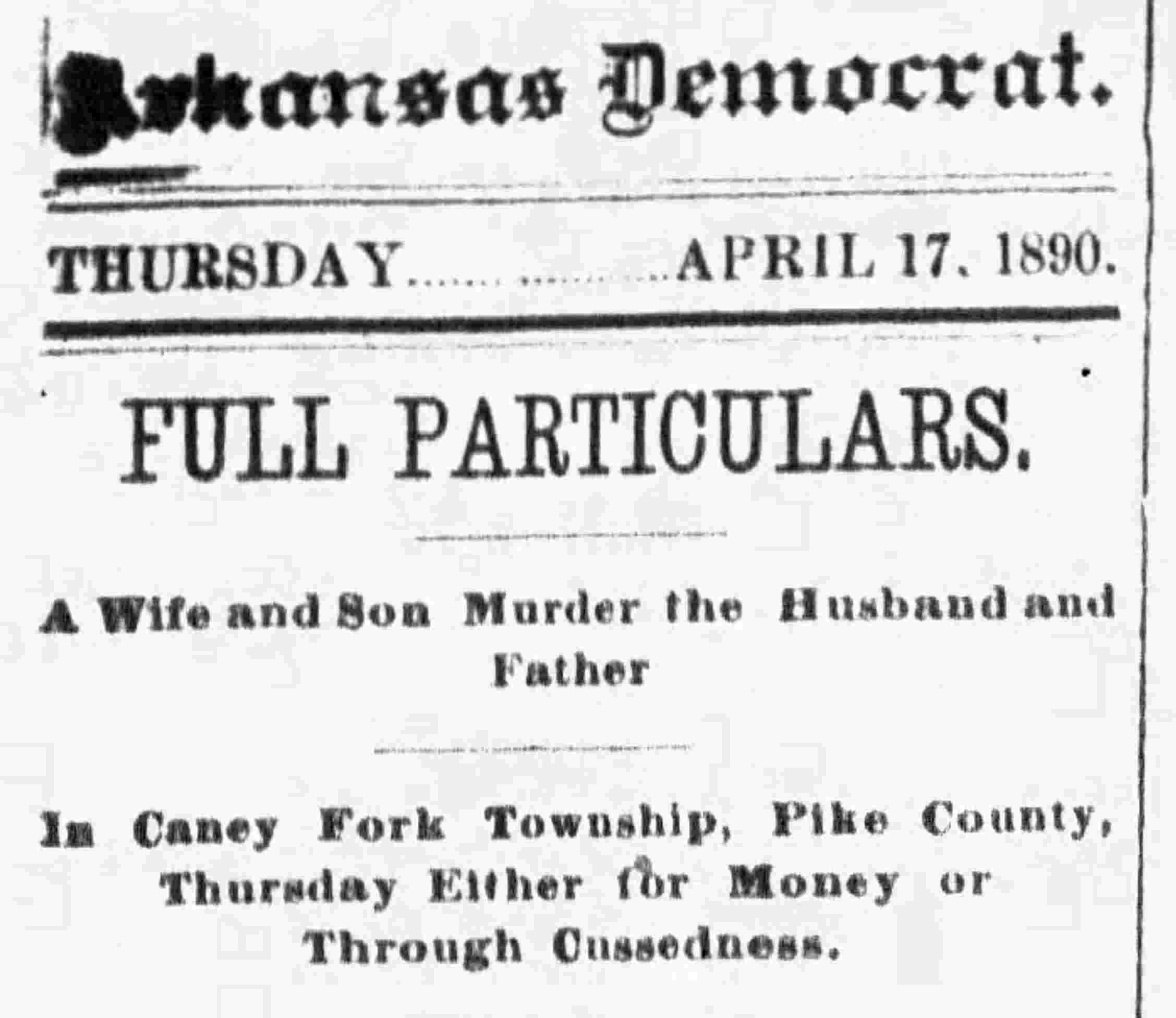
     Isaac and Sarah had nine children; George W., Susan C., Sarah E., S.M, Mary, Dallas William “Dal”, Isaac Sylvester “Hon”, Emeline and W.B.[7]  The family moved from Jackson County, Georgia to Clark County, Arkansas around 1855.[8]  Isaac and Sarah lived on a small farm near Antoine, Arkansas.[9]  By 1890, all of their children were grown and living on their own with the exception of their son Isaac Sylvester aka “Hon”.[10] There had for some time been ill feelings between father and son. The Arkansas Democrat published an article on 17 April 1890 stating, “It seems that there has been trouble between father and son every since the boy has been of any size; at one time beating his father almost to death with a pine knot.”  The article goes on to say that the son plead guilty and was charged a fine of $50, which his mother quickly paid, then was released. A short time later, he was arrested again on a vagrancy charge sworn out by his father and was sentenced to thirty days in jail. As “Hon” was being taken down for incarceration, the clerk pointed out that the action was illegal as the case should have gone before the county judge. He was released immediately, not serving any time. Sylvester “Hon” Widener swore to take revenge on his father.[11]

“On Thursday, 3 April 1890, Isaac Widener left home to visit his son-in-law, Will Wright, living three miles away. Mr. Widener appeared to be in his usual health and spirits, and after eating dinner he set out for home, arriving there about 3 o’clock. On his way home he had a business conversation with W.D. Wood, who states that he was apparently as well as usual. About half an hour before sundown Mr. Widener went to the home of Frank Sanders, another son-in-law, who lived within 300 yards of his house. Mr. Sanders says that his father-in-law talked to him some time about the farm, fences, etc., and was not complaining in any way. After this Mr. Widener walked back to his house. About 7 o’clock Mr. Sanders heard the old man calling but paid no attention to it, thinking it was one of the usual family rows. He went to bed shortly, but about 11 o’clock he was awakened by hearing “O Frank! O Frank!” coming from Widener’s. He arose, dressed and went down near the house, when he heard the old man say…”O Hon, you have killed me.” Sanders returned home and early next morning went turkey hunting. Meeting H.T. Sparks on the mountain he told about the row, adding, “I expect the old man is pretty badly hurt.” About two hours after sunrise he reached home and was eating his breakfast when Mrs. Widener ran up and calling for the camphor, said: “Pa is dying.” Sanders and wife returned to the house with her, where Sanders found Isaac Widener cold in death and perfectly rigid with the exception of his neck, which seemed to be broken and on examination Sanders found the back of the neck badly bruised and blackened….. Dr W.E. Biggs was summoned and after examining the body testified that the spinous process of the axis was broken down and the spinal column fractured sufficiently to cause death, and seemed to have been done by a blow.”[12]

On 6 April 1890, Mrs. Sarah Widener and her son, Isaac Sylvester “Hon” Widener were brought into custody being charged with the murder of Isaac Widener, the husband/father of the accused.[13]
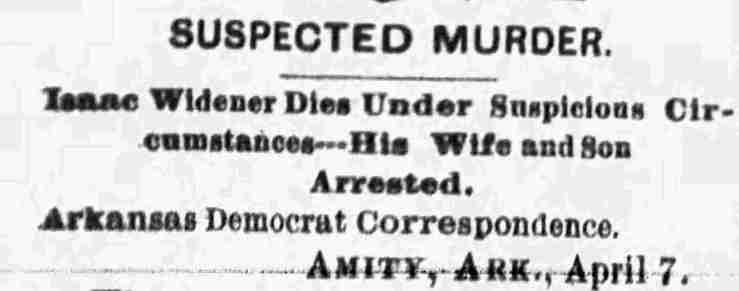
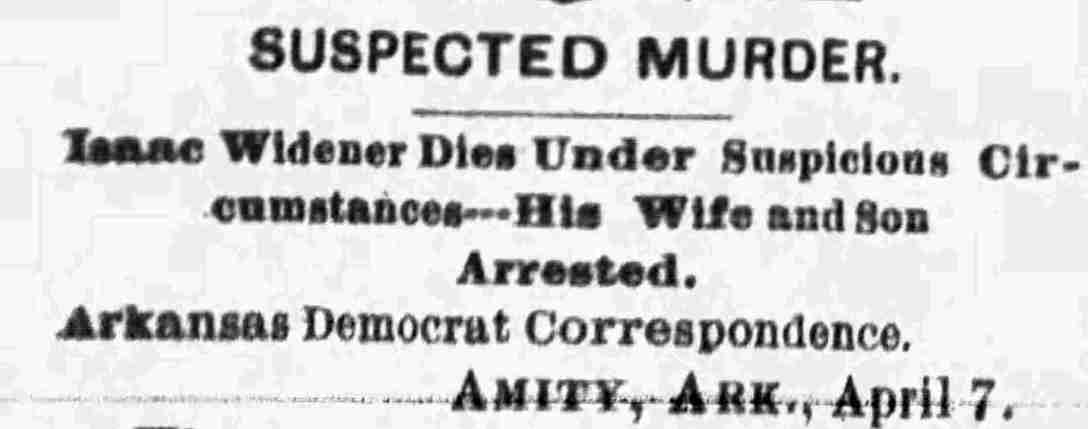
“Suspicion immediately rested on Mrs. Widener and her son. A coroner’s jury was impaneled to take testimony. After hearing all the evidence they found a verdict of death by foul means and the two were arrested and sent to jail to await the action of the grand jury.”[14]

Sarah Widener’s side of the story was printed in the above-mentioned newspaper article stating the following: “I am about 56 years old. Married Isaac Widener in Jackson county, Georgia, about 38 years ago. We have raised a family of ten children, of whom six are living – five in Pike county. Last Thursday my husband went on horseback to see our daughter, Mrs. Wright. He got back at about 3 o’clock in the afternoon and was complaining of the colic – to which he was subject. He soon got very sick and went to bed. I was up all night with him. Early next morning he got worse and I ran over to Frank Sanders’ to get some camphor. Sanders and wife returned with me and when he went into the house the old man drew two breaths and died”

     Sylvester “Hon” Widener’s account was somewhat different, claiming that he and his father “had a row just after dark.”[15] He stated that he slept in the same room as his father and about 11 o’clock his father called him and said “Hon, I want you to get you another home and quit boarding off me.” [16] He said that he told his father that he would leave. The next morning, he had gone out to feed and when he returned his mother ran out to him telling him that “the old man” was dead. He went into the house with his brother-in-law, Sanders and his mother finding his father dead.[17]

     There was speculation at the motive for the deed. Some were rumored to say that it was done to get possession of property and money, but others were quoted as saying, “The boy did it out of diabolical cussedness and his mother is trying to shield him.[18]

     To be able to have the official records of this case would have been enlightening; however, the courthouse burned in 1895 leaving no trace of the records. According to the various newspaper articles written at the time of the trial, I learned that the grand jury found both Sarah Widener and her son, Isaac Sylvester, guilty of murder.
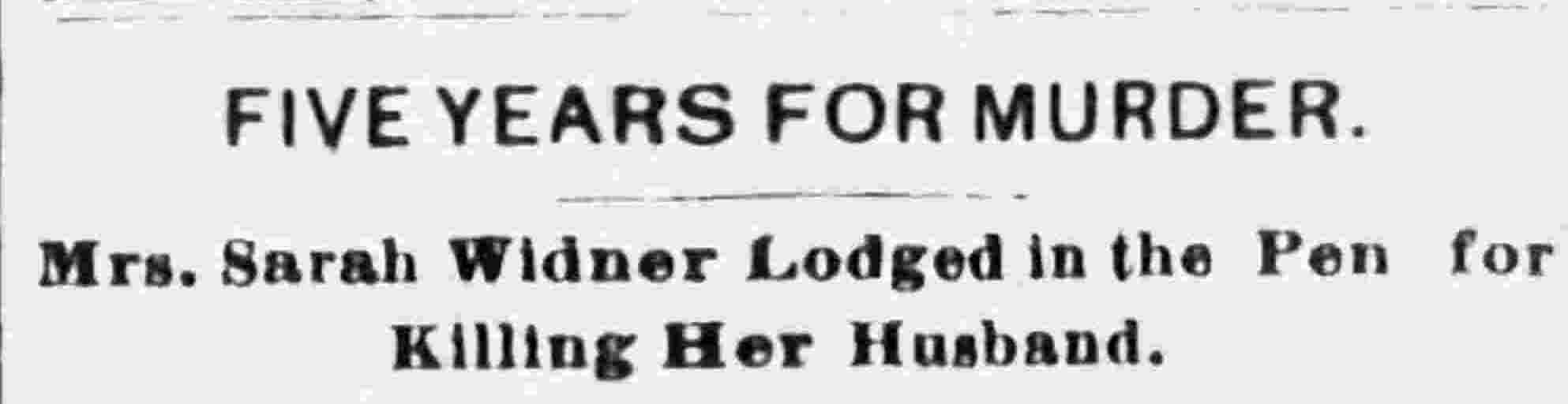
“Mrs. Sarah Widener, who was convicted at the recent term of the Pike county circuit court, of the murder of her husband, Isaac Widener and sentenced to five years imprisonment in the state penitentiary, was taken to Little Rock last week.”[19]

“The proof against them was conclusive, and only the advance age of the woman saved her from the gallows. The case of Sylvester, the son, will be tried at the next term of the Pike county circuit court.”[20]

     Another newspaper article said that she was convicted of “accessory to murder” and sentenced to five years in the state penitentiary. Her son Sylvester was convicted of murder and sentenced to twenty-one years.[21] I was not able to locate a newspaper detailing his trial, but found a small snippet in The Southern Standard (Arkadelphia, Arkansas) newspaper from 1903 stating that Sylvester Widener was pardoned after having served about thirteen years of his sentence.[22] By 1910, Sylvester is boarding and working on a farm in Caney Fork, Pike County, Arkansas for John H. Nutt.
     Mrs. Sarah Widener died during her time of incarceration, just a short time before her five-year sentence would have been finished. Her exact date of death and place of burial is not known.

     A crazy twist to this story was found in a newspaper article dated 16 October 1902.

     “Many of our readers will remember the murder of Isaac Widener, which his wife and son were convicted and sent to the penitentiary for a term of 21 years. Mrs. Widener died there while “Hon”, the son, served several years and was at last pardoned.

     Not long since, Frank Sanders, son-in-law of the murdered man, confessed on his death bed that it was he who committed the murder and that the parties convicted were innocent. “Hon”, when the confession was made known to him, burst into tears and said “I told them all the time that I was innocent.”

     Though “Hon” wasn’t exactly an innocent man (having abused his father severely), he did not commit the crime of murder. It is my opinion, after reading all the news articles and stories from periodicals, that Mrs. Sarah Widener most likely thought her son committed the murder. As in the past, she was protecting him by making up the story about her husband complaining of colic. Evidently, both mother and son thought the other committed the crime, when all along it was the son-in-law, Frank Sanders.

[1] Arkansas Democrat (Little Rock, Arkansas), 17 April 1890, pg. 6, imaged in Newspapers.com (https://www.newspapers.com/image/152498342) ; accessed 30 July 2019

[2] ibid

[3]  1860 U.S. census, Alpine, Clark, Arkansas; Roll: M653_39; Page: 169; Family History Library Film: 803039. NARA microfilm publication M653, 1,438 rolls. Washington, D.C.: National Archives and Records Administration, Ancestry.com Operations, Inc. 2009; Provo, UT, USA

[4] Georgia, Marriage Records from Select Counties, 1828-1978; Ancestry.com Operations, Inc.2013; Provo, UT, USA

[5] 1870 U.S. Census; Alpine, Clark, Arkansas; Roll: M593_49; Page: 173A; Family History Library Film: 545548NARA microfilm publication M593, 1,761 rolls. Washington, D.C.: National Archives and Records Administration: Ancestry.com Operations, Inc. 2009, Provo, UT, USA

[6] Pike County Archives and Historical Society (Murfreesboro, Arkansas), The GEMS of Pike County Arkansas, Fall 2007, Volume 18 Number 04, page 138-141; Family History Library; http://www.familysearch.org/, accessed 25 July 2019

[7] ibid

[8] ibid

[9] ibid

[10] ibid

[11] Arkansas Democrat (Little Rock, Arkansas), 17 April 1890, pg. 6, imaged in Newspapers.com (https://www.newspapers.com/image/152498342) ; accessed 30 July 2019

[12] ibid

[13] ibid

[14] ibid

[15] ibid

[16] ibid

[17] ibid

[18] ibid

[19] The Southern Standard (Arkadelphia, Arkansas), 15 Aug  1890, pg. 3, imaged in Newspapers.com (https://www.newspapers.com/image/ 288911778) ; accessed 30 July 2019

[20] Arkansas Democrat (Little Rock, Arkansas), 17 April 1890, pg. 6, imaged in Newspapers.com (https://www.newspapers.com/image/152498342) ; accessed 30 July 2019

[21] Pike County Archives and Historical Society (Murfreesboro, Arkansas), The GEMS of Pike County Arkansas, Fall 2007, Volume 18 Number 04, page 138-141; Family History Library; http://www.familysearch.org/, accessed 25 July 2019

[22] The Southern Standard (Arkadelphia, Arkansas), 8 Oct 1903, pg. 2, imaged in Newspapers.com (https://www.newspapers.com/image/280299111 ) ; accessed 30 July 2019
Researching Quaker Records

Week 30 of Amy Johnson Crow’s 52 Ancestor Writing Challenge

(Prompt: Easy)

     Researching in the Quaker record books can be an easy way to trace your ancestors and discover not only their social life, but also their migration patterns. I discovered that I had a large branch of Quaker ancestors on my paternal side and a smaller branch on my maternal side.

     Quakers, who were also called “Friends”, were a Christian group of religious movements formally known as the Religious Society of Friends, Society of Friends or Friends Church. Members of the various Quaker movements are all generally united in a belief in the ability of each human being to experientially access the light within, or “that of God in everyone”.[1]

     The early Quakers had a unique way of speaking, dressing and of doing business. They refused to take up arms against anyone, for any reason. They believed that men and women were equal and that all races and nationalities were equal as God’s children. They believed that everyone should be educated and welcomed all children to their schools including slave children. [2]

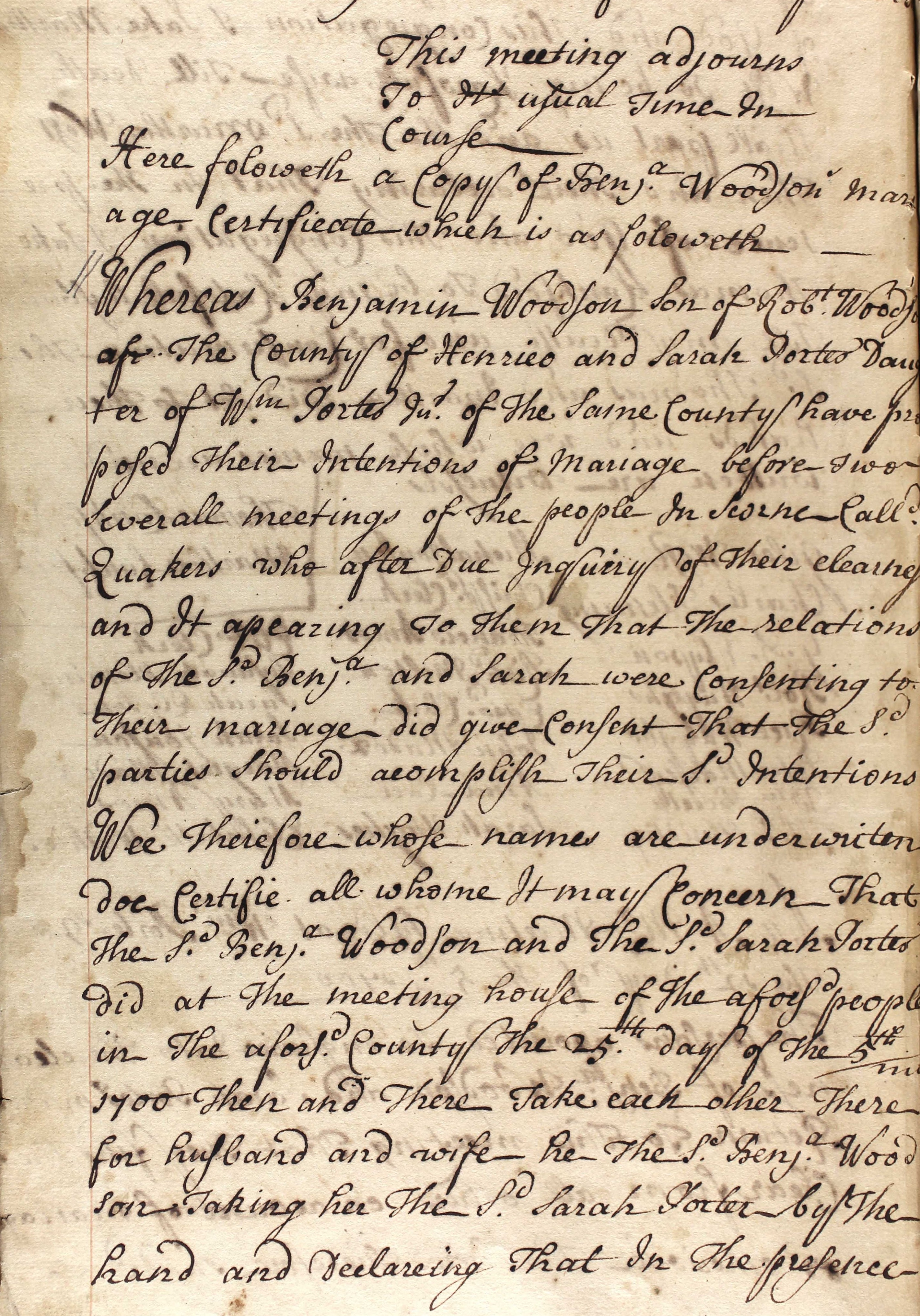
     When we read the minutes of their meetings, we learn so much about their lives. I have found many great entries for my early Quaker ancestors and have made many great discoveries. One such discovery was made while reading the beautifully written wedding ceremony for my seventh great grandparents.

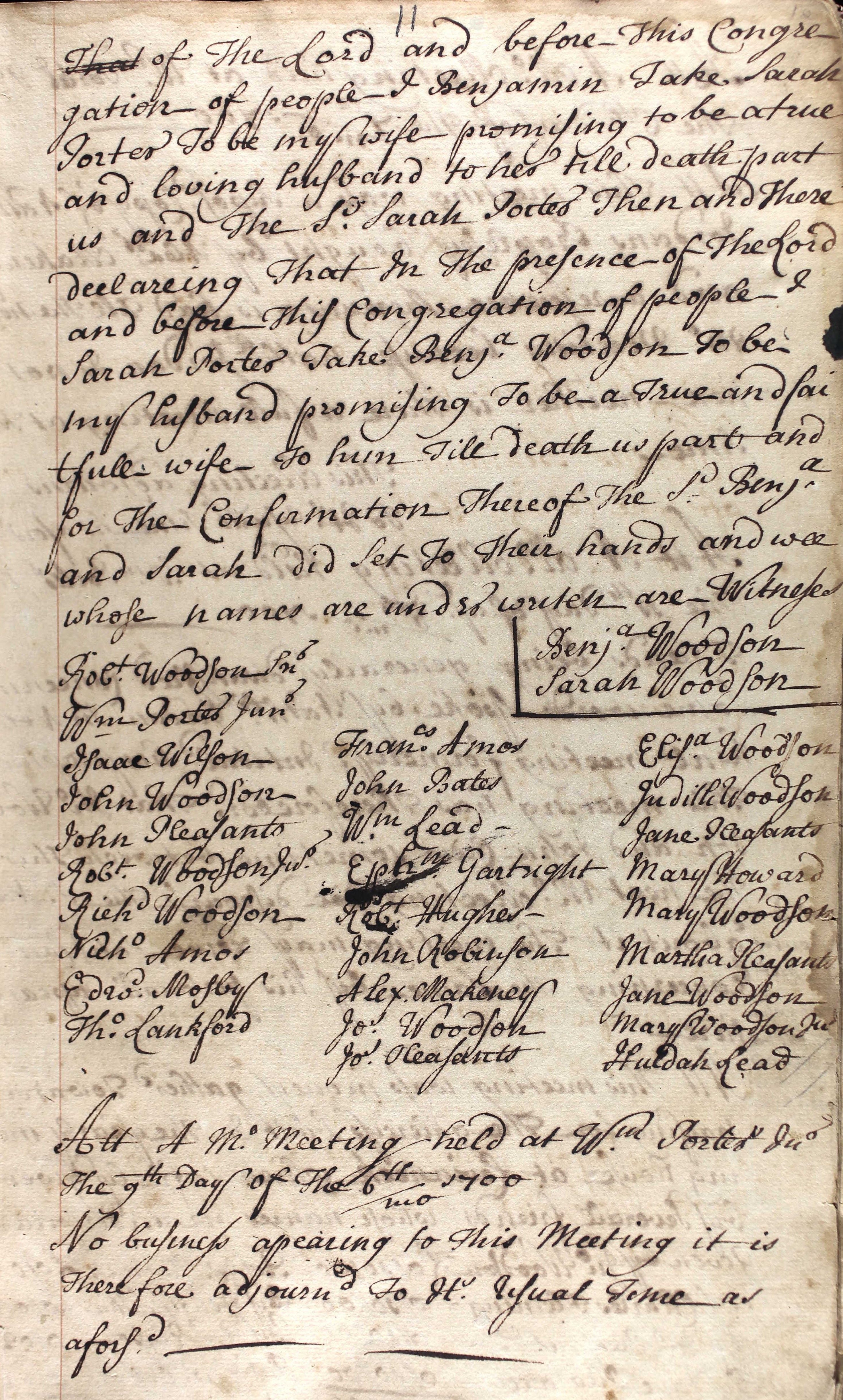
“ Here foloweth a copy of Benj. Woodson marriage certificate which is as foloweth— Whereas Benjamin Woodson son of Rob’t Woodson of the county of Henrico and Sarah Porter daughter of Wm. Porter in of the same county have proposed their intentions of marriage before sworn several meetings of the people in sworn called Quakers who after due inquiry of their clearing and it apeazing to them that the relations of the sd. Benj. and Sarah were consenting to their marriage did give consent that the sd. parties should accomplish their sd. intentions. Wee therefore whose name are underwriten doe certifie all whome it may concern—That the sd. Benj. Woodson and the sd. Sarah Porter did at the meeting house of the afor’d people in the afors’d county the 25th day of the 5th mo. 1700 then and there take each other therefor husband and wife – he the sd. Benj. Woodson taking her the sd. Sarah Porter by the hand and declaring that In the presence of the Lord and before this congregation of people—I Benjamin take Sarah Porter to be my wife – promising to be a true and loving busband to her till death part us  and the sd. Sarah Porter then and there declaring that In the presence of the Lord and before this congregation of people – I Sarah porter take Benj. Woodson to be my husband promising to be a true and faithful wife to him till death us part and for the confirmation thereof the Sd. Benj. and Sarah did let go their hands and – whose names are and so written are witnesses

Benj. Woodson, Sarah Woodson

Robt. Woodson              Frances Amos               Elija Woodson

Wm Porter                    John Bates                     Judith Woodson

Isaac Wilson                 Wm. Lead                    Jane Pleasants

John Woodson               Eph’m Gartright           Mary Howard

John Pleasants               Rob’t Hughes                Mary Woodson

Robt. Woodson Jr          John Robinson               Martha Pleasants

Rich’d Woodson             Alex Makeney              Jane Woodson

Nich’o Amos                Jo. Woodson                  Mary Woodson

Edw’d. Mosby               Jo. Pleasants                  Huldah Lead

Th’o Lankford

Att A M Meeting held at Wm Porter the 9th day of the 6th mo. 1700 No business appearing to this meeting it is therefore adjournd to it’s usual home asforsd.”[3]

     When you find a marriage record in the Quaker minute books, you not only get the marriage date, but much more information. I felt as though I was a part of the wedding ceremony as he took her hand and said his wedding vows to her, and she said hers to him. I was also able to confirm who each of their fathers were. Something even more amazing was the fact that I recognized several of the names of witnesses. The Woodsons and Porters are my maternal ancestors, whereas the Pleasants, Wilsons and Leads are my paternal ancestors. I thought it was pretty astounding to find both my mother’s and father’s ancestors in the same Quaker meeting.

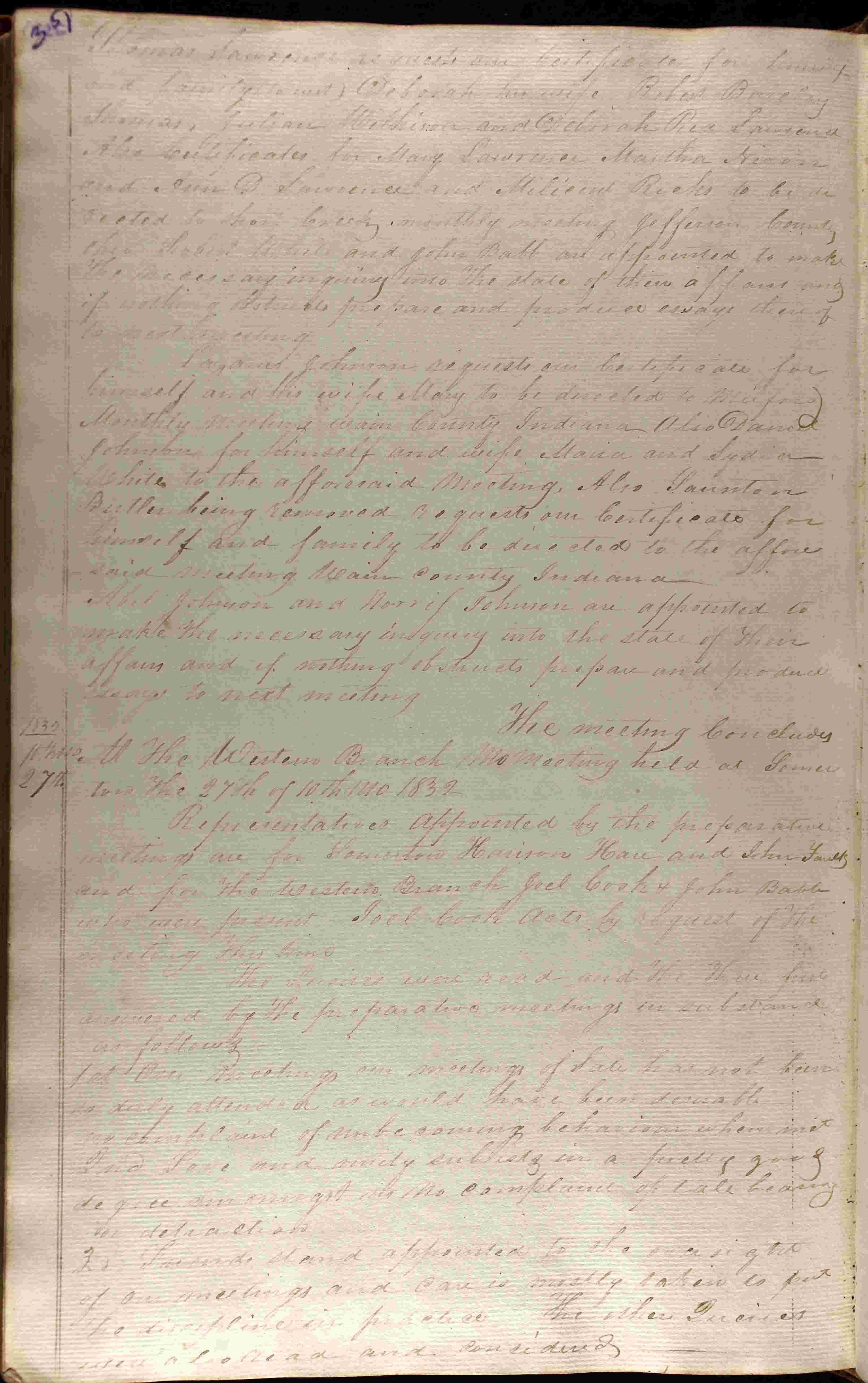
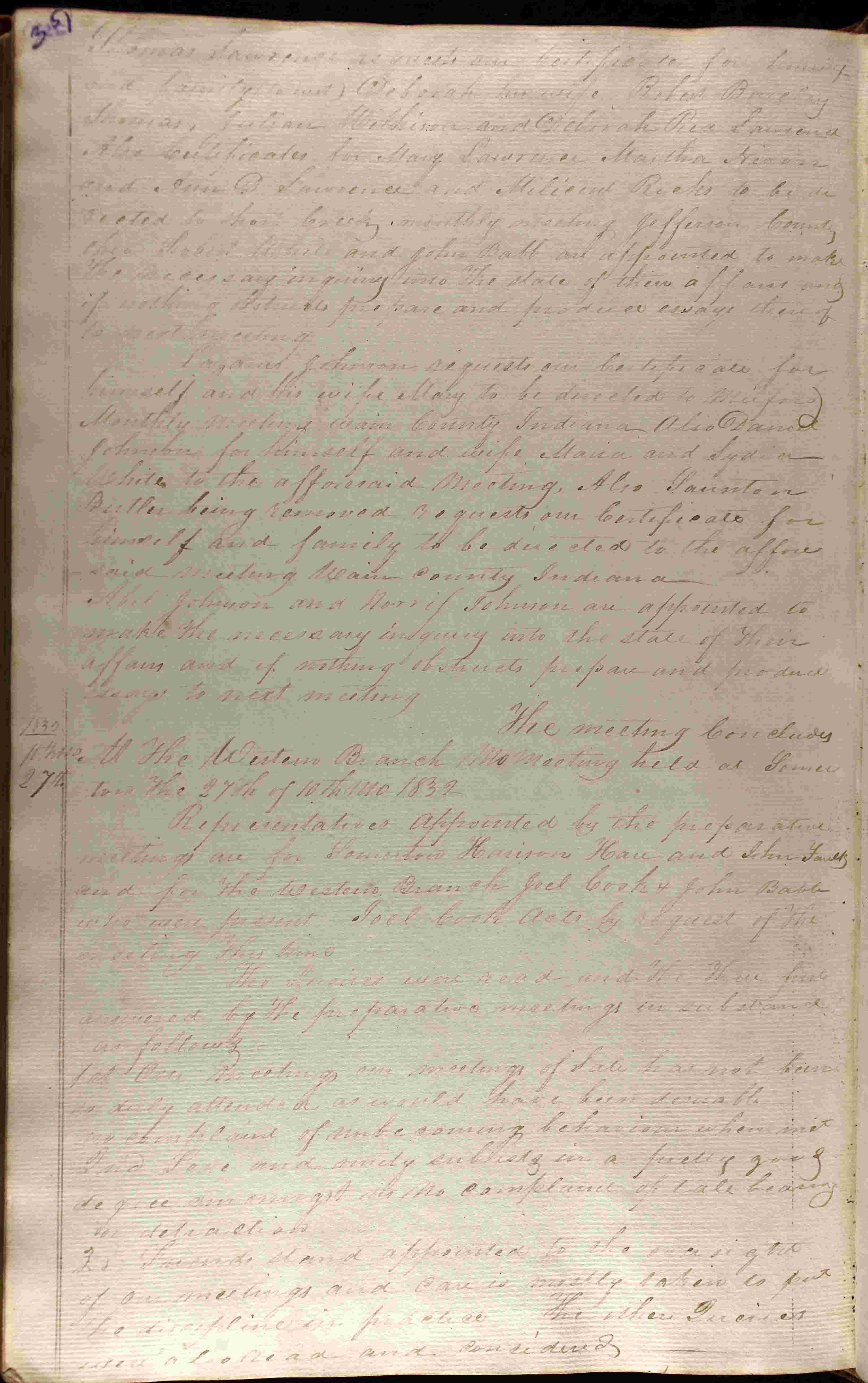
     It is also easy to track the migration patterns of you Quaker ancestors through “Certificates of Removal”. This is an English term meaning “to relocate”[4] When a family or individual wished to relocate and join another meeting, they would need a Certificate of Removal to take with them. The information contained in the certificate was written into the minutes of the former meeting naming the destination. In return, the information was recorded into the minutes of the new location. This also helps to gauge how long it took a family to relocate. In the case of my fifth great-grandparents, Lazarus and Mary Johnson; I wanted to see how long it took them to move from Suffolk City, Virginia to Milford, Wayne County, Indiana.

“Lazarus Johnson request a certificate for himself and his wife Mary to be directed to Milford monthly meeting Wain County Indiana…”[5]

To Milford Meeting, Wayne County Indiana, Dear Friends Lazarus having removed to reside wherein your ___ requests our certificate for himself and wife Mary. These are to certify that they are members with us and that his affairs appear to be settled to satisfaction as such we recommend them to your Christian care and ___ given forth by the W Branch Monthly Meeting of Friends held alternately at Somerton in Nansemond County the 22nd of 12th month 1832”[6]

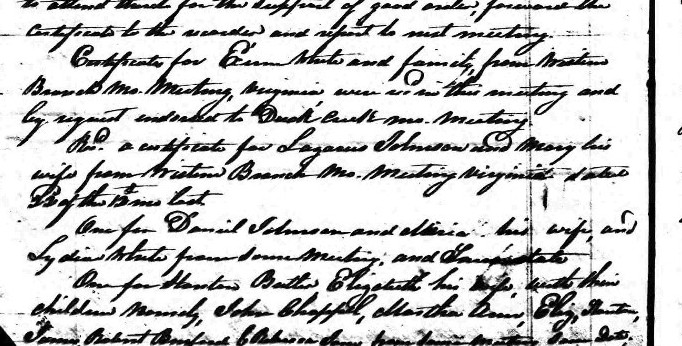
“Rc’d a certificate for Lazarus Johnson and Mary his wife from Western Branch Monthly Meeting Virginia dated the 12th mo last”

   To be sure they made it to Indiana, I checked the minutes for the monthly meeting in Milford, Wayne County, Indiana. They were received into meeting on the 23rd day of the 3rd month 1833. The move took them approximately three months to complete.  

     I have much more to discover in these wonderful and thorough Quaker records. They are very extensive and can be a bit overwhelming when beginning to research, but there are a great number of finding aids and resources out there to help.

                        “He that does good for good’s sake seeks neither paradise nor reward,                  but he is sure of both in the end”

     ~ William Penn


[1] ‘Quakers’ (2019) Wikipedia. Available at: https://en.wikipedia.org/w/index.php?title=Quakers&oldid=908112704 (Accessed: 28 July 2019)

[2] Arnold, Lisa Parry “Thee & Me: A Beginner’s Guide to Early Quaker Records; First Edition 2014; ISBN 978-0-9903142-0-2

[3] Haverford College; Haverford, Pennsylvania; The Record Book, 1699-1757; Collection: Philadelphia Yearly Meeting Minutes; Call Number: 1116/203; Ancestry.com. U.S., Quaker Meeting Records, 1681-1935 [database on-line]. Provo, UT, USA: Ancestry.com Operations, Inc., 2014.

[4] Arnold, Lisa Parry “Thee & Me: A Beginner’s Guide to Early Quaker Records; First Edition 2014; ISBN 978-0-9903142-0-2

[5] Haverford College; Haverford, Pennsylvania; Book Commenced, 1806; Collection: Philadelphia Yearly Meeting Minutes; Call Number: 1116/193; U.S., Quaker Meeting Records, 1681-1935; Ancestry.com; Ancestry.com Operations, Inc.2014; Provo, UT, USA

[6] Haverford College; Haverford, Pennsylvania; Book Commenced, 1806; Collection: Philadelphia Yearly Meeting Minutes; Call Number: 1116/193; U.S., Quaker Meeting Records, 1681-1935; Ancestry.com; Ancestry.com Operations, Inc.2014; Provo, UT, USA

Finding Therman

Week 29 of Amy Johnson Crow’s 52 Ancestors in 52 Weeks Challenge

This week’s word prompt was “Challenging”

     Therman Aubrey Carter was my mother’s biological father. He was born on 23 September 1915 in McLennan County, Texas; the son of Claude Wallace Carter, Sr.  and Prudie Myrl Westbrook.

     Although that sounds like a simple statement, it took over twenty years of research, frustration, tears, throwing my hands up in despair and constantly chasing what seemed to be a ghost, until a couple of years ago, I was finally able to uncover the truth.

     Let’s stop and rewind twenty-five years to 1994.  I was housewife, a busy mother of three small children, I had a very limited budget, no computer and a friend who just introduced me to the wonderful world of genealogy.  I found it all very fascinating as she began to show me her family tree, stories she had written and discoveries she had made. Eagerly, I rushed home, and, in my excitement, I began drawing out a family tree chart on a blank piece of paper. Very quickly, I realized how lopsided it was. I’ve always known that my mother didn’t know who her biological father was, it was not a big secret. Everyone knew that her stepfather adopted her and never thought anything else about it.  It never really seemed to be that big of a deal, until I started filling out my family tree.

     Who was this mystery man, I wondered? I couldn’t ask my mother since she passed away when I was 16 years old. Her mother, my grandmother, passed away two years later, when I was 18 years old and my great-grandmother was gone as well.  There weren’t many people left that I could ask. I decided to write a letter to each of my grandmother’s two sisters, her only siblings who  were still living. I wasn’t sure if they knew anything or not, but it was worth a try. Keep in mind, this was “snail mail”. I didn’t own a computer or have email at that time and to make a long-distance phone call (no cell phones back then) was an extravagant expense that I couldn’t afford.

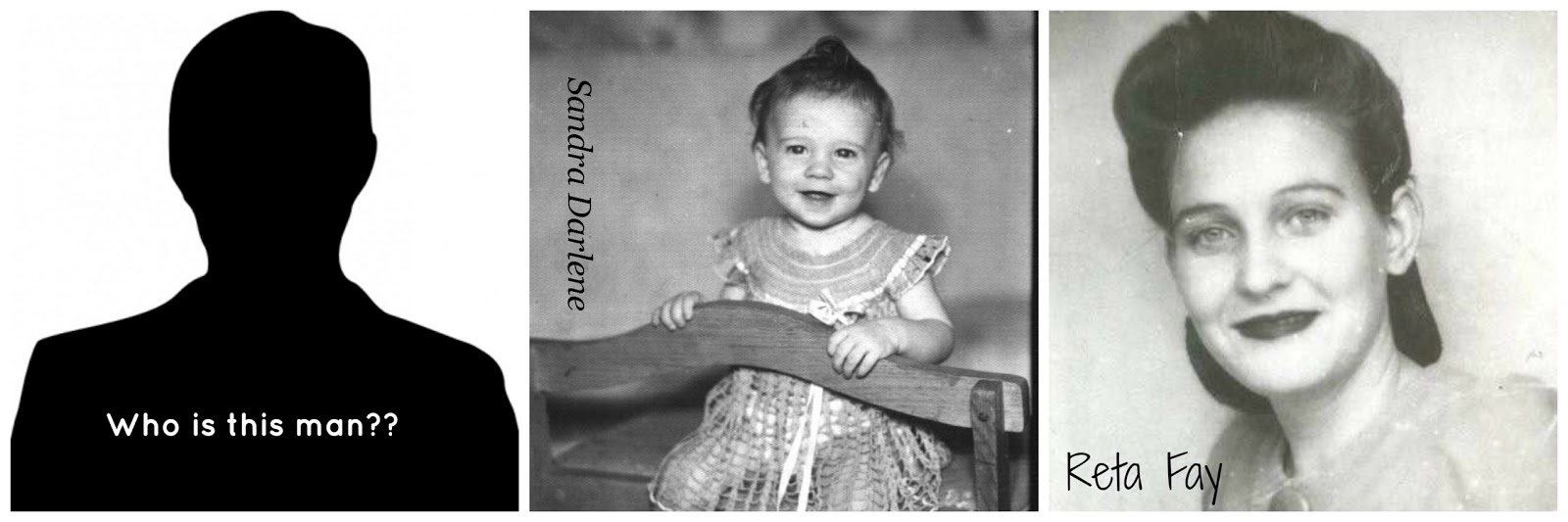
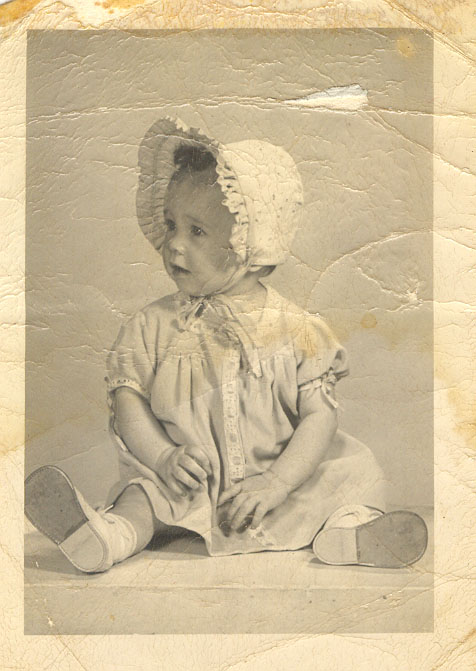
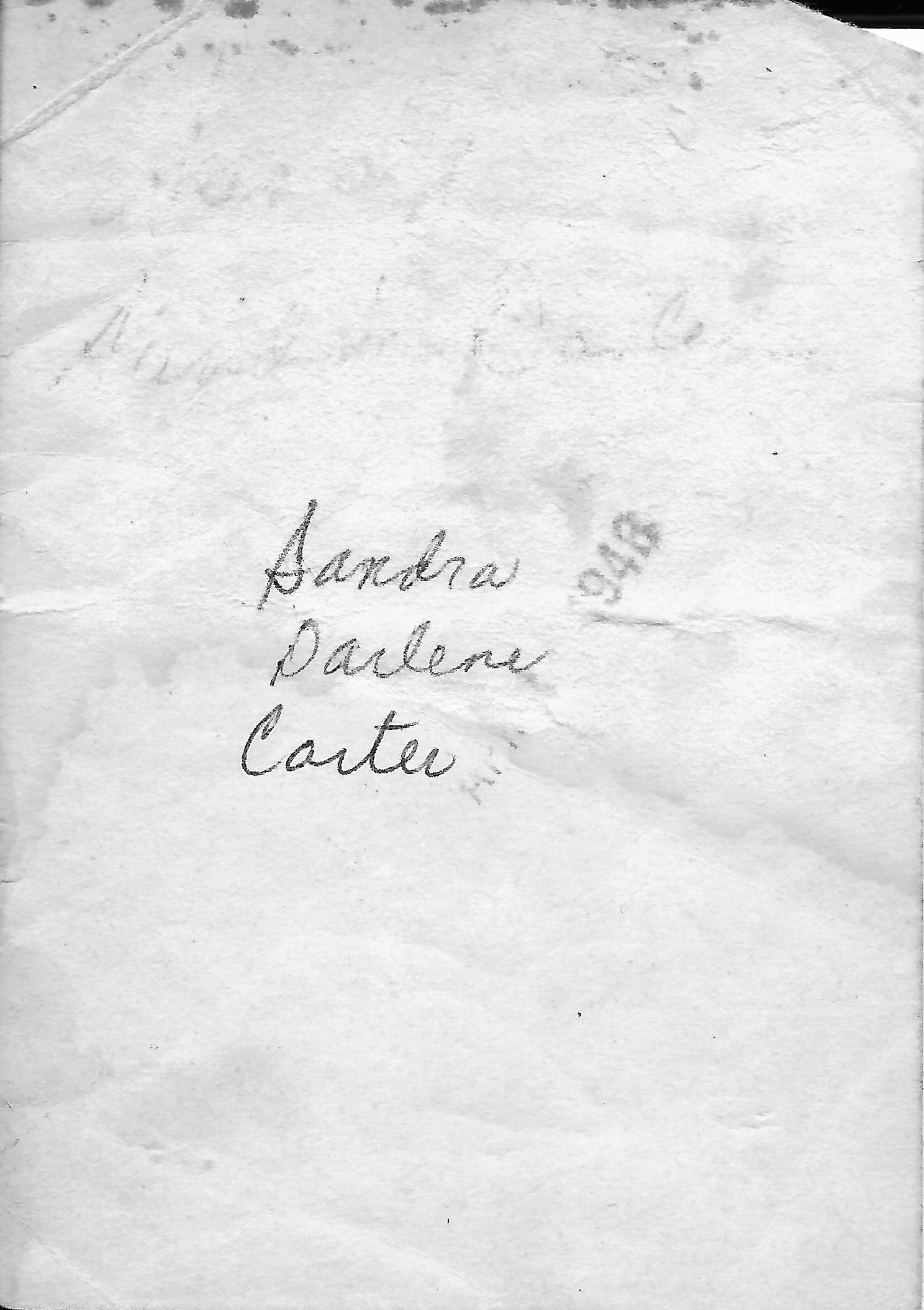
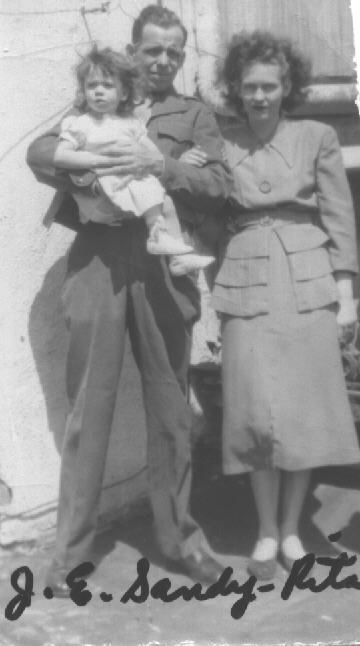
   In the meantime, I went to talk to my dad to ask him if he had ever heard anything about Mom’s birth father. I vaguely remember hearing that his name was Robert Carter, Howard Carter or maybe Herald?? We all knew that the last name was Carter because there was a picture of my mother when she was a small child. The name on the back said Sandra Darlene Carter. The photo was taken in 1948, which would have been before her stepfather adopted her.

     After speaking with my dad, I learned a little more. He was told by my grandmother that my mother’s birth father was Robert Carter and that he was from Waco. At least now I had a name.  He didn’t know much else except that the family owned some type of business in Waco and that mother’s biological father worked there. He also had remembered hearing a story about the one and only time my mother saw her father. My grandmother was at Cameron Park having a picnic with my mother and her other daughter. She (my grandmother) had gone to throw away their trash and when she turned around to go back to the girls, a man was holding my mom. He was her father. My grandmother ran toward them, jerking my mother from his arms and stormed off. She never saw him again.

     I heard back from my two aunts eventually which confirmed the name Robert Carter. They never met him and never asked my grandmother questions because they respected her privacy.

  “Dear Teresa, I wish I could tell you more about your mother’s father, but I know very very little. His name was Robert Carter, he lived in Waco. I only saw him once, don’t remember what he looked like. He had been married, told Reta that he had his divorce but she found out later that he didn’t, so she left and went to Big Springs Tx where her best girl friend lived. He came out there and got thrown in jail. I don’t know what happened. Anyway, (Grannie), my mother and dad went out there and stayed until Sandra was born, then brought them back to Waco with them. Reta never wanted to talk about him so I respected her privacy. She met and married Jannice’s dad when Sandra was still so small that we just never thought of him as her dad since Johnny adopted her. You can write the courthouse at Big Spring, Tx and ask for a copy of the birth certificate. Give date of birth and the mother’s name, try Carter if there is none, try Roundtree. I don’t know. I’m sorry I can’t help you more but that’s all I know about him.  I called and talked to Reta’s friend, the one that lived in Big Springs but she couldn’t help much, she said he was tall, dark headed with blue eyes like Sandy, said Sandy looked a lot like him. She hadn’t seen or heard of him in years. She didn’t know if he was even still alive. I have some pictures of Grannie and Grandpa Roundtree, I’ll get some copies made for you. Take care, I love you. Aunt Aline”

“ Dear Teresa …… I never knew your mother’s father. I know his name is Bob or Robert Carter and he left before your mother was born. Reta and Johnny married when Sandy was only 6 months old and Johnny adopted her. She could not have had a better father than Johnny. He loved her very much. Well honey, I wish I could help you more… Aunt Georgia”

     I had a few clues to get started with. I had a name and I had a location. There was a family owned business and there may be some type of record of him being thrown in jail in Big Springs. I also learned that he was married at the time my grandmother knew him and that he was tall, dark and handsome.

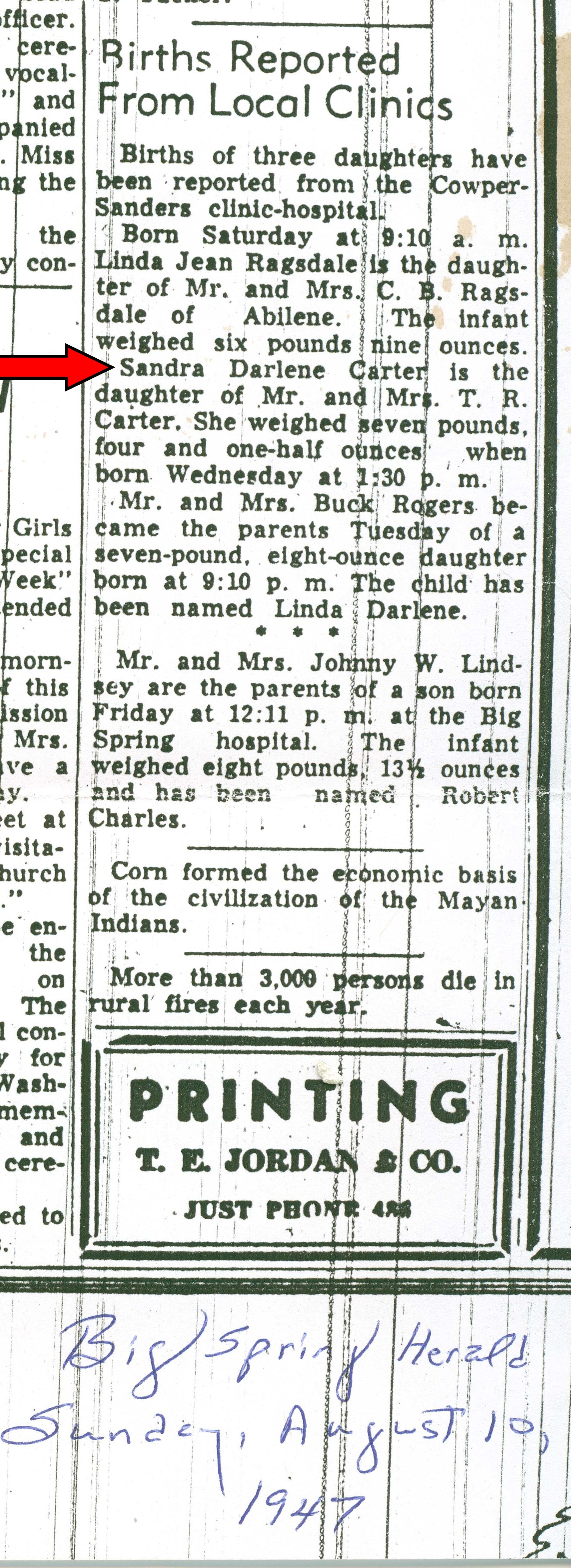
     I felt that the most important thing to do first was to talk to my grandmother’s friend. Surely a close friend would know more. I asked my aunt for her address so that I could write her. She only had a phone number, so I decided that it was worth the cost of a long-distance call if it gave me answers. It didn’t give me answers, only the same things I already knew. Back to square one. I knew there was no point in sending off for a birth certificate. I already had a copy that shows her father’s name as John Edward Badeaux. After an adoption, the name is changed to the adoptive parent and the original record is sealed. The next best thing was to try to find some type of birth announcement in the newspaper. I called information to get the phone number to a library in Big Springs, Texas. I gave them a call to see if they could locate a birth announcement, which they did. A few weeks later, I received an envelope in the mail with a printed copy of my mother’s birth announcement. Things took so much longer back then than they do now.

     I may not have had anyone left on this earth who could tell me who my mother’s biological father was, but this little snippet in the newspaper put a smile on my face as I read my mother’s name and saw how much she weighed when she was born as well as the exact time of day.  The newspaper article also confirmed the father’s name was Carter. According to the article, his initials were T.R. The R standing for Robert, I assumed, but I was not sure what the T stood for. I began trying to search for a T. R. Carter living in Waco during the time my mother would have been conceived. I found a few that were possibilities but nothing that really fit. Once, I must have been desperate and found a prison record for a Tex Carter from Big Springs, Texas who was serving a sentence for bigamy. It didn’t seem to match but I kept the information just in case.  I tried just about everything I could imagine.  Since the birth announcement article showed “Mr. and Mrs.”, I thought perhaps they may have gotten married, so I searched for marriage records but found nothing except my grandmother’s marriage to John Badeaux. The marriage record used her maiden name and no record could be found with her being married to a Carter. Every corner I turned ended up being a dead end. I searched city directories, census records, courthouse records and every other record I could possibly think of. There was not a record of a Robert Carter who would have fit the person I was looking for. I had a lot of great clues and a lot of puzzle pieces. The problem was that I just couldn’t find the right piece to finish my puzzle. In great frustration, I set it aside and began working on other branches of my family tree.

     Fast forward a few years to around the year 1998. I decided to give it another go. I began writing and making phone calls to my aunts once again hoping something I said would trigger a memory, something they didn’t think of before. I asked them to tell me about my mother when she was little. One of my aunts told me that she used to babysit my mother while my grandmother worked at the sewing factory. She remembered that the Carter family (my mother’s biological father’s Carter family) lived across the street from their house. My aunt said that “whenever the old lady (assuming she meant a grandmother) was visiting, she would come knock on our door wanting to see your mother”.  My grandmother told them to keep my mother hidden so they couldn’t see her, and so they did. I wish they had remembered this bit of information earlier, but at least now I had a lot more to go on. I knew I could figure this out now.  

     As soon as I could manage it, I went to the genealogy library in Waco. My youngest daughter was in gymnastics at the time so I would drop her off at her practice and drag my other two daughters with me to the library.  I began looking through old telephone directories to find a listing for my aunt. Once I found a listing for her, I made a note of the address. The next thing I did was to find the location on a city map. I had to figure out what the address would have been to the house directly across the street. After finding what I needed, It was back to the telephone directory. I went through every listing of the Carter name looking for that street address.  There it was in black and white.  Claud and Juanita Carter were living directly across the street from my aunt. I had the right family, now all I had to do was to find a Robert who was a member of this family. Easier said than done. I began the long process of researching this family.  Beginning by looking up census records, then birth records, death records, obituaries, newspapers, etc. There were only two people with the name Robert in this family that I could find. One of them was a nephew to neighbor Claud and would have been about 6 or 7 years old at the time of my mother’s conception, so he was out. The other Robert was an uncle to neighbor Claud. He may have been a contender, although he was old enough to be my grandmother’s father, he was not living anywhere close to the area. There was another problem with this Robert Carter, his full name was Robert Jackson Carter. It didn’t match the birth announcement. There was another clue from the beginning that I thought might help prove that I was a least on the right track with this Carter family. My dad had remembered that he was told that the biological father worked at the family’s business in Waco. The next trip to the library was spent looking through telephone directories and pouring over microfilmed newspaper from 1940’s and 1950’s looking for any type of advertising that would reveal any clues for this Carter family and their business.

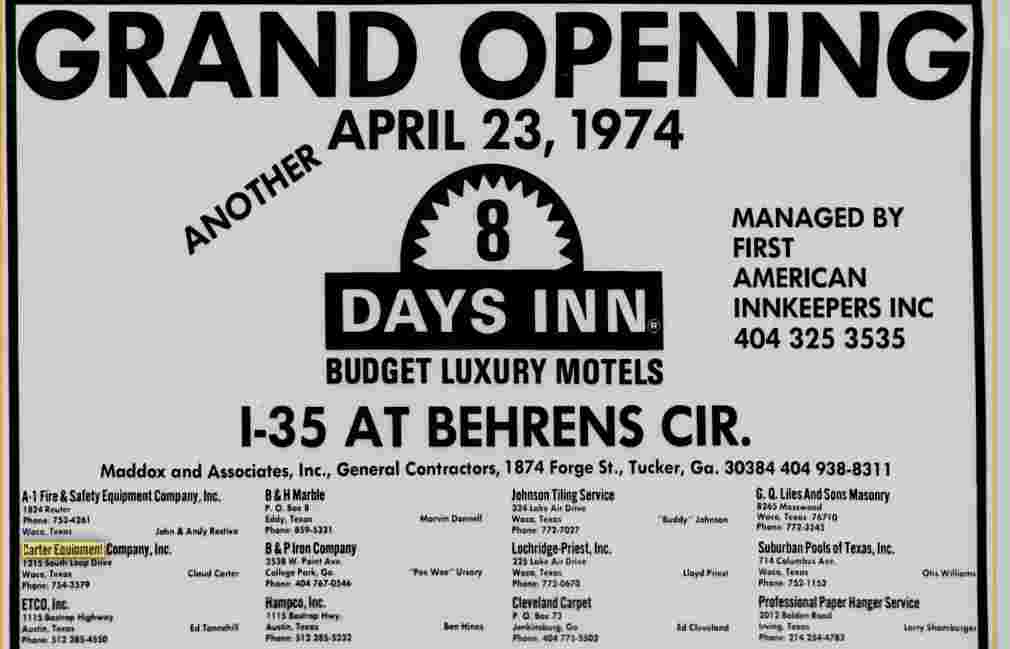
       I found a listing for Carter Equipment Company, Inc with the name Claud Carter as the owner. This confirmed that there was a family owned business associated with the neighbor. I was convinced that I had the correct family, but just couldn’t figure out where my Robert Carter fit it.

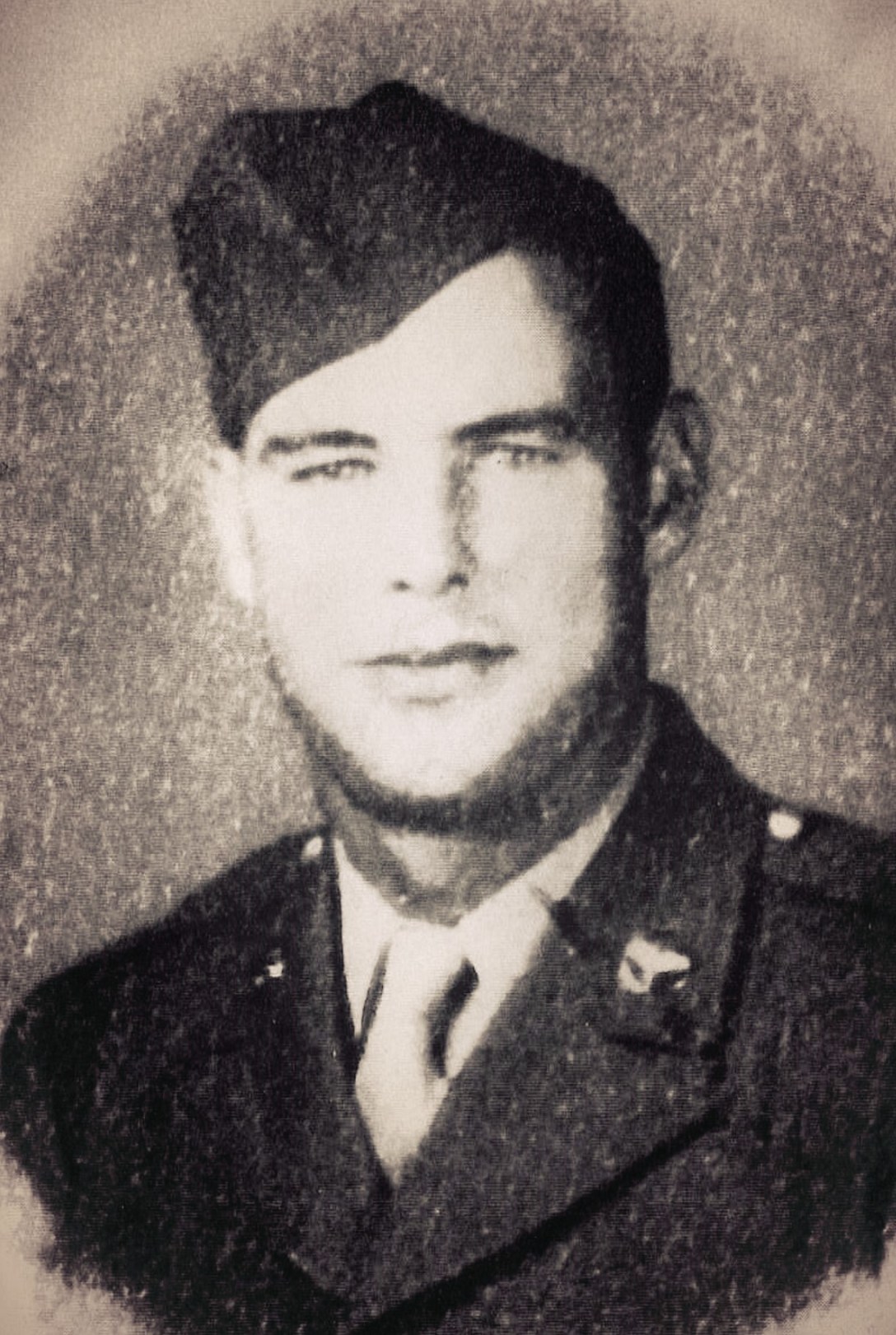
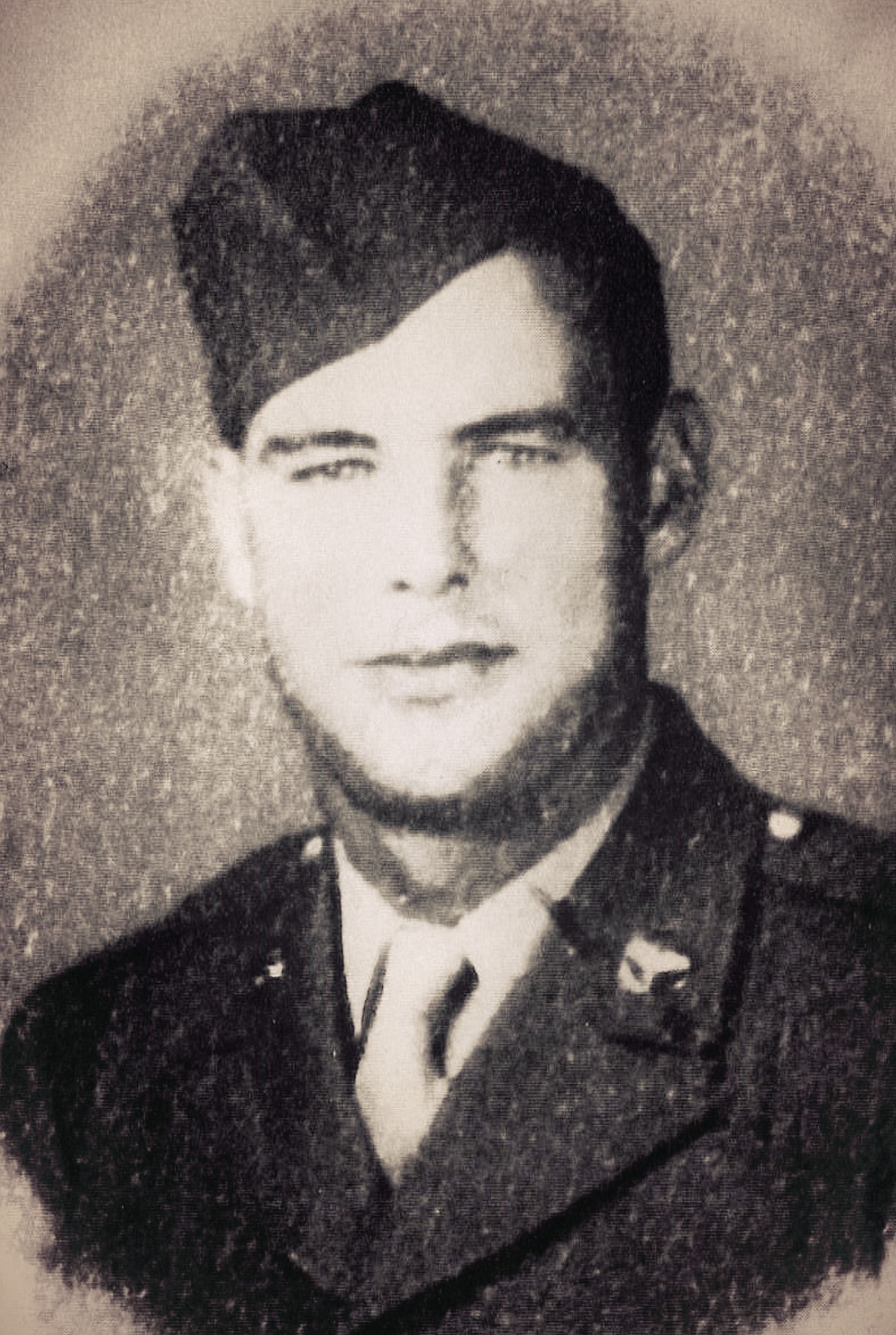
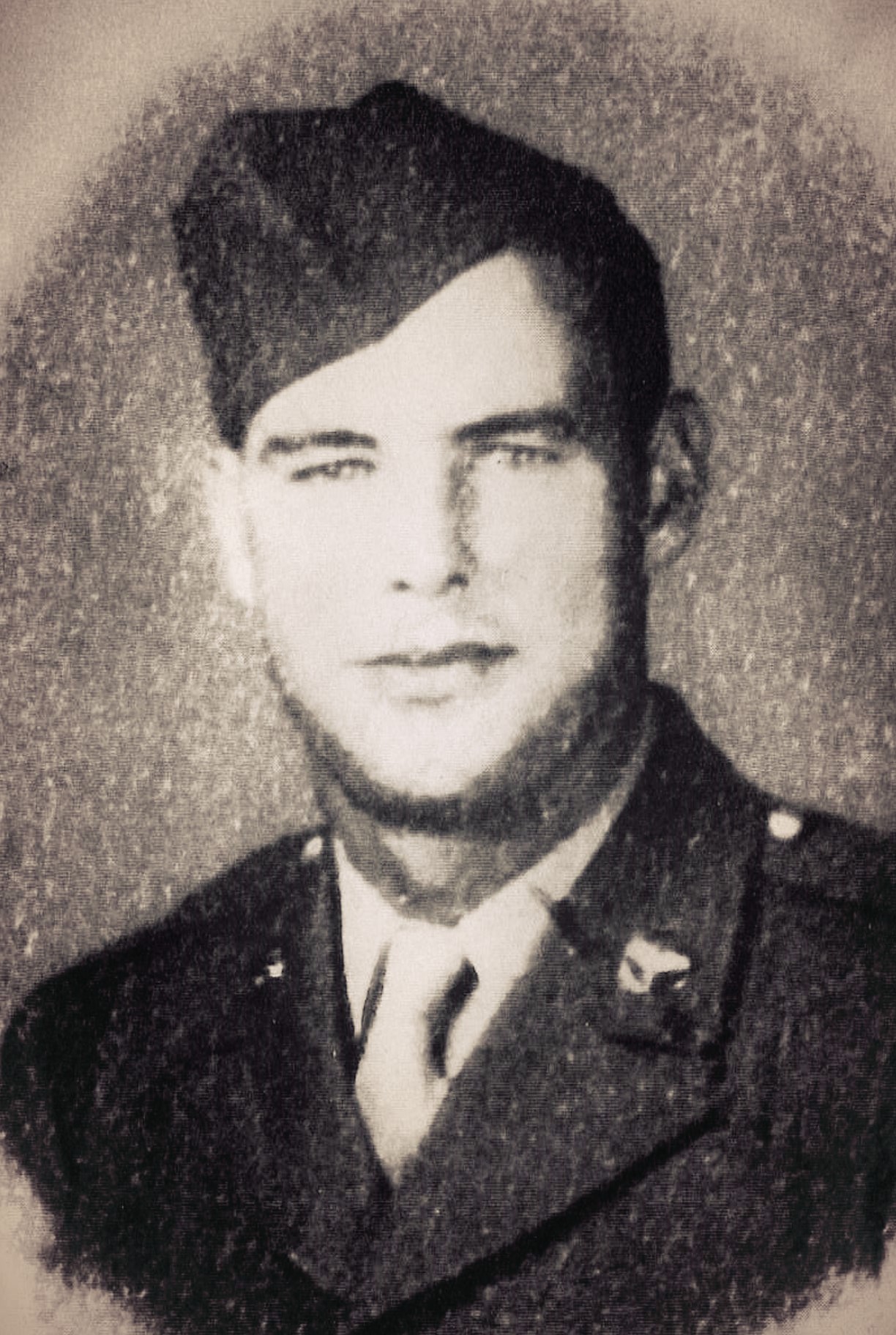
     I spent the next several years researching the ancestors of the neighbor, Claud Carter. I researched every branch of this man’s family tree until I became very familiar with all the names. A few years into researching this family, I came across someone who had a family tree online. They had listed the neighbor, Claud Carter as their father. I started pouring over their tree and came across a picture with the caption “Robert Carter” underneath. When I saw the picture, my jaw nearly hit the floor. My mother looked so much like him. I knew I finally found my Robert Carter.

This photo was labeled “Robert Carter”

I contacted the owner of the family tree by email. She immediately wrote back to me. I told her my mother’s story and she told me her story in return. The stories seemed very similar. There was an affair that resulted in an illegitimate birth.  She told me that her father, Claude Carter, Jr.  was still living and that she would introduce me to him. I asked her about the photo she had labeled as Robert Carter. She said that he was her father’s brother, but he was no longer living. I was a little confused and thought that I must have missed something because I did not find this Robert anywhere in my research. I knew that Claude Jr. had a brother named Therman Aubrey Carter but had never seen a picture of him. I also knew that Therman had a son named Robert who was about 7 years old when my mother was born.  I started thinking back to the newspaper article about my mother’s birth announcement. It said, “Mr. and Mrs. T.R. Carter”. Could the “T” have stood for Therman and might the “R” have been a misprint that maybe should have been an “A” instead? Perhaps he told my grandmother his name was Robert?  I didn’t really know at this point, only speculation. I did know that I had the correct Carter family and that my mother looked just like the man in the picture. The owner of the family tree called her father and set up a time and place for us to meet.  We met for lunch at Cracker Barrel restaurant in Waco. I had printed the picture of “Robert Carter” from the family tree so that Claude Jr. could identify it for me. He immediately said that it was his brother, but his name wasn’t Robert, it was Therman. He had no idea why his daughter labeled it Robert. I was a bit disappointed, but deep in my heart I knew that Therman had to be my mother’s biological father. We had a nice lunch and conversation. He told me about himself and his family. I asked him if he had ever heard of my grandmother, which he hadn’t. I left feeling disappointed but somehow content. I put the little picture in a frame and put it on my shelf along with other family photos. I felt that I had given it everything I could and felt that I would be ok with that.

      I continued to work on the Carter family tree along with other branches of my family for the next several years. Fast forward to the year 2015 when DNA testing was more affordable. I decided to take the plunge to see if I could confirm this Carter connection. The wait time seemed eternal, but after finally getting the notification that my results were complete, I could hardly wait for them to download.  I clicked on my matches and started seeing the names I recognized as being in the Carter family tree…. Carter, Westbrook, Goodnight, Day!! I knew I had it right. There was no doubt about it now. I looked for the girl who was the owner of the Carter family tree as she told me she had taken a DNA test. She was nowhere on my match list. I found it strange that she didn’t match. My top DNA match at the time was someone with the username “whiteelkglass”. I had no earthly idea who that was. He was a very close match, so I decided to write to him to find out exactly who he was. He wrote back to me telling me his name and I found out that he was the grandson of Therman Aubrey Carter. This all finally made some sense now. My “Robert Carter” was Therman all along. I wanted to be 100% certain so I decided that I would try to figure out a way to get my mother’s adoption records unsealed. I knew it would probably be a huge expense to hire a lawyer, but at my husband’s urging, I decided that I would go ahead and do it.  I contacted a lawyer’s office and made an appointment. The lawyer informed me that I had to petition the judge from the jurisdiction my mother was adopted in and that I had to have a good reason for wanting to uncover the adoption. Doing it for genealogical purposes wasn’t one of them. My mother had several medical conditions that may have very well been inherited. The petition was made to the judge to unseal the adoption records for the purpose of obtaining medical history.  The lawyer wrote the petition and I waited (most impatiently). It didn’t take long to get an answer. I received a call from the lawyer’s office letting me know that I had an answer to my petition. I couldn’t even wait to drive to the office, I had the secretary open the letter and tell me over the phone, right then and there, I had to know immediately. She said these exact words, “It says that the natural father is Therman Carter of Waco, Texas”.  Before my emotions took over, I let her know that I would be there shortly to pick up the paperwork and pay them the fees. After I hung up the phone I started crying and screeching. I’m sure I did some jumping up and down and running around the house. I knew that I knew that I knew it had to be him. For the cost of about $125 and about two weeks waiting time, I found out what I spent twenty years looking for.

     After I calmed down, the thought came to me. If his name was on the adoption papers as the natural father, my grandmother had to have known all along what his real name was. Why did she try so hard to keep his name a secret? What had she gone through with this man that she was determined to keep her daughter hidden from?  Now that I had one mystery finally solved, it presented more questions, which I eventually uncovered.

     Once I knew the exact person to focus on, I gathered everything I had on Therman, which wasn’t much. I knew that he passed away in 1983, just 6 months before my mother. I headed to the genealogy library in Waco to find his obituary in the microfilmed newspaper.

     “Thermen Aubrey Carter, 68 of 1822 Windsor died Monday at a Temple hospital. Services will be at 10 a.m. Thursday at Connally-Compton Downtown Chapel, Bert Mercer officiating. Burial will be at Rosemound Cemetery. Mr. Carter was a World War II veteran and was a foreman for Brown and Root for 20 years. He was a member of American Legion Post No. 121 and Veterans of Foreign Wars. He was a member of the Church of Christ. Survivors include three daughters, Myrl Holmes of Garland, Patricia Korenek of West and Jeanie Grillett of Houston; five sons, Robert Carter of Lancaster, Therman Carter, Jr. of Jefferson City, Mo., James Carter of Lufkin, Louis David Carter of San Francisco and Kurt Daniel Carter of Bryan; three sisters, Dorothy Parks, Opal McCutchen and Melba Bettinger, all of Waco; a brother, Claude W. Carter of Waco; 19 grandchildren; and three great-grandchildren.”

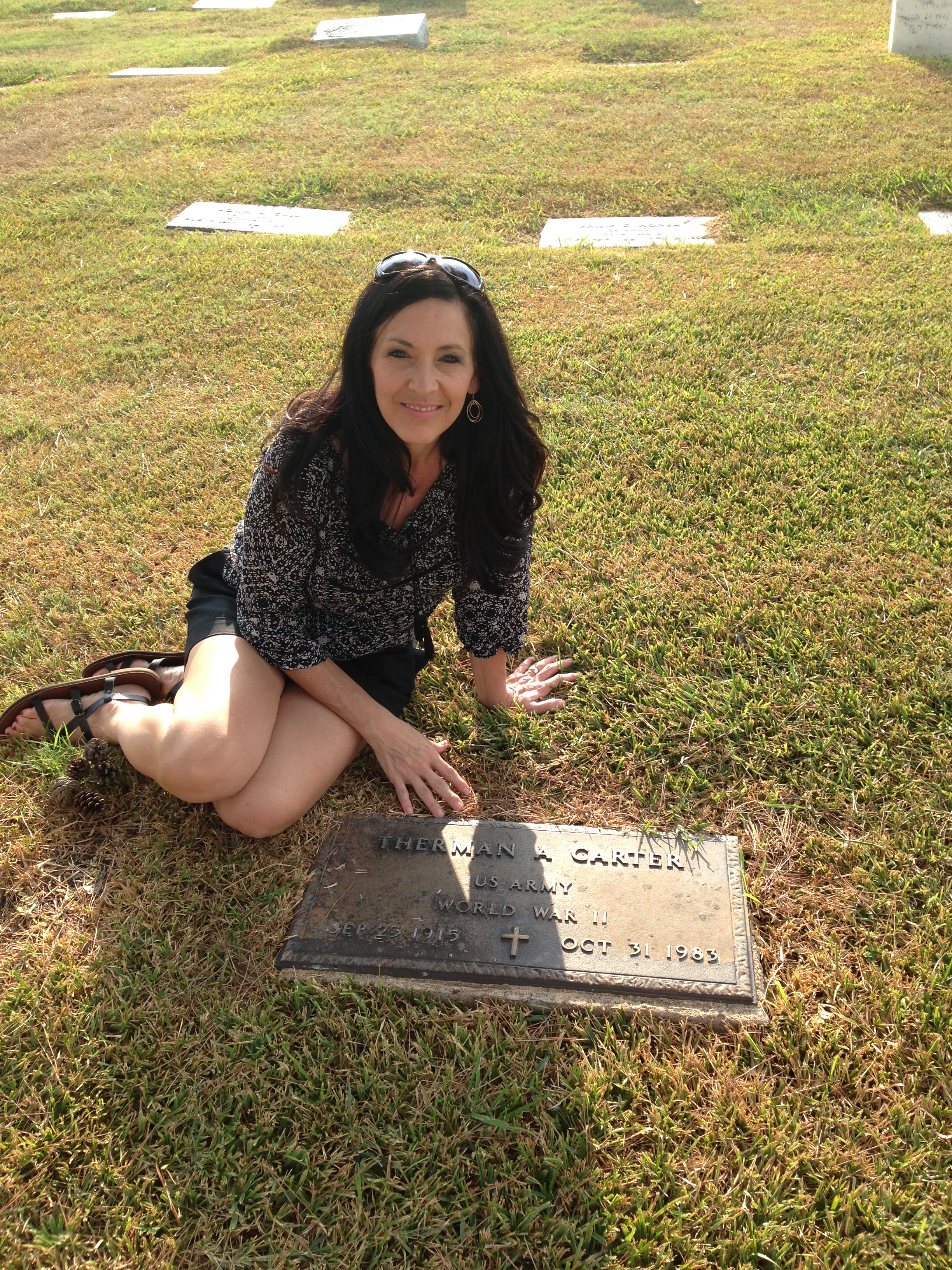
     Since I was already in Waco when I found the obituary, I decided that I would try to find his grave. After arriving at the cemetery, I realized how huge it was and that it may take a while to locate. After spotting the military veterans’ section, I decided to take a chance and check there. Once I found his headstone, I had a flood of emotion.  After twenty years, I had found him.  There were still so many unanswered questions, but at least I finally found Therman.

Remember When……

Week 28 of Amy Johnson Crow’s 52 Ancestors in 52 Weeks: Reunions

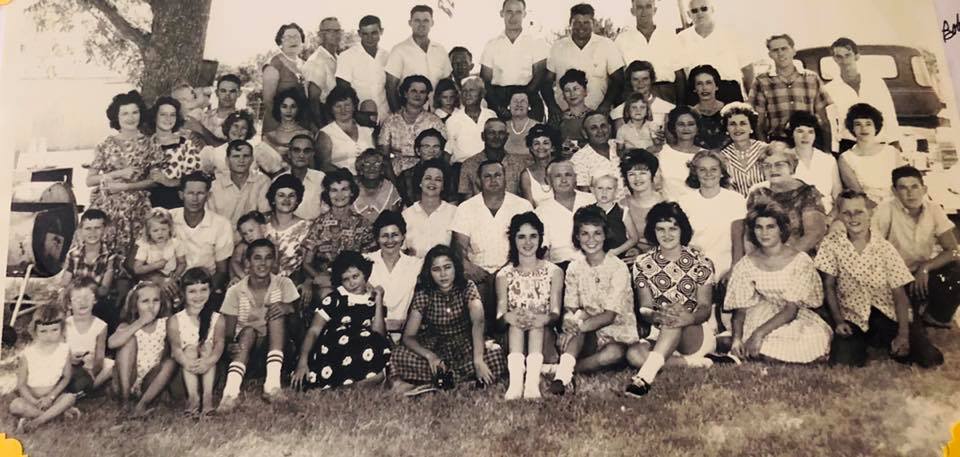
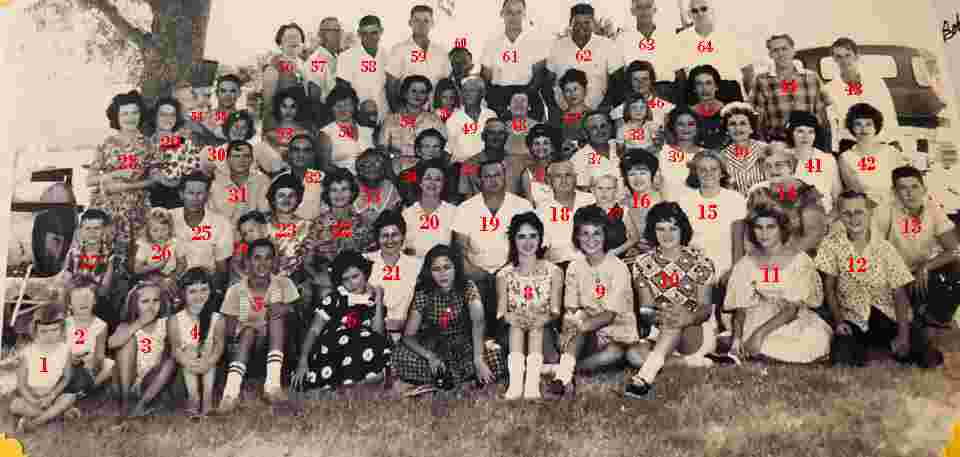
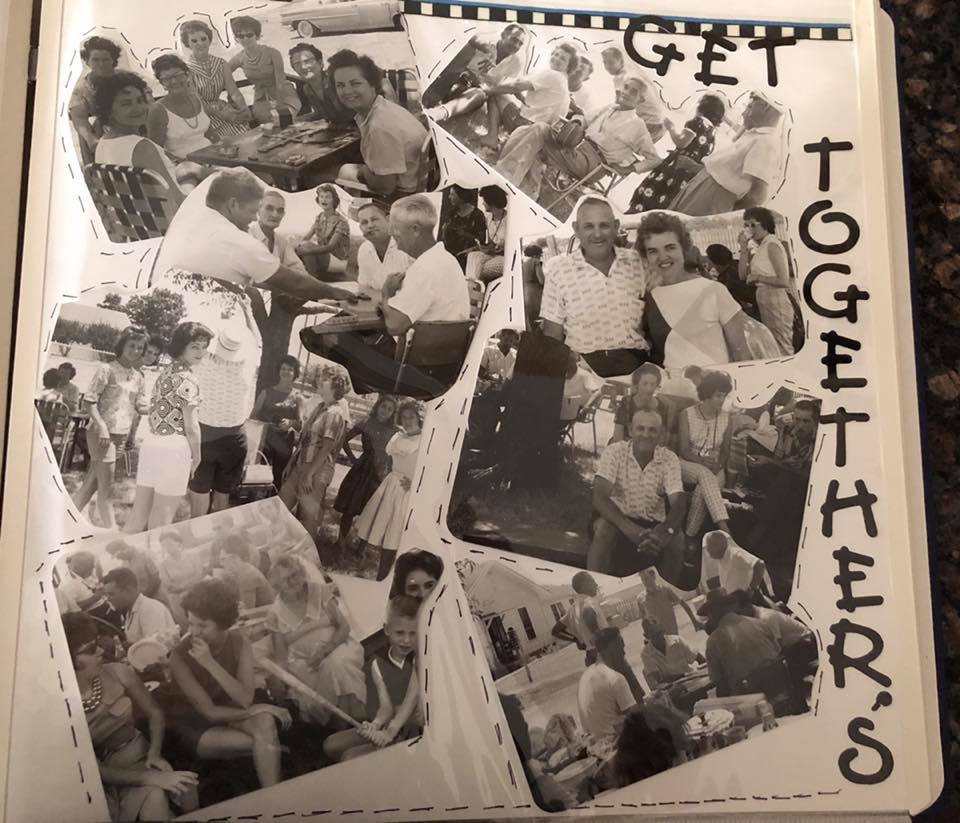
Stafford Family Reunion, August 5, 1962

          I grew up having family reunions on my father’s side of the family every summer, but as I got older, they seemed to fade away. Family members grew apart and went about their on lives leaving behind the timeless traditions. As the years passed, cousins lost contact with one another. Although each may think back on those memories from time to time, the next generation does not have the same priceless connections to the past. Memories soon fade and families are separated by time and space.

     As I grow older, I realize just how important those reunions were and how important family is to me. I remember the anticipation of getting ready to go to a reunion. Mom was busy in the kitchen making fried chicken, macaroni and cheese, and usually some type of dessert. Upon arrival, there was always that one great aunt who, every year said, “I haven’t seen you since you were this big” and brings her hand down to about half your size (even though you just saw her at the reunion the year before). It was always the same familiar things year after year; eating good food, the grown-ups playing dominos and catching up with the latest family news, the kids going outside to toss the football around or play hide-and-go-seek.  

     Oh, how I would love to travel back in time to be a part of that again. Times were simpler than they are now. I think that’s what I miss the most, the simplicity of the day and time.

     It seems that now days most people have such busy lives that they don’t take the time and effort into creating these special memories. Whether it’s caused by over-commitment or disinterest, family reunions have taken a back seat, but I have devised another way to keep our family memories alive and to hopefully bring back that family camaraderie. Since so many things today revolve around the internet, I decided to use that as a tool to benefit my objective and therefore, created a family Facebook group to serve as an ongoing family reunion of sorts.

     It all started when I was trying to locate a picture of my great-great grandmother. I had never seen a picture of her, but I knew one had to exist since she did not pass away until 1940. I began asking my close family if they had a picture of her or if they had ever seen one. My queries were met with negative results. I then began to branch out onto other branches of the family tree. I went back to the great – great grandmother in question and started working on a descendant chart listing every child, grandchild and so on. I did several obituary lookups so that I could have a listing of surviving family. Then I began the process of trying to locate living family members. I found myself growing giddy each time I was able to contact a cousin and when they responded with enthusiasm that I had contacted them. I eventually found a cousin who had the prized photograph and I was able to share it with all the others that I had previously contacted. They were all thrilled to say the least.

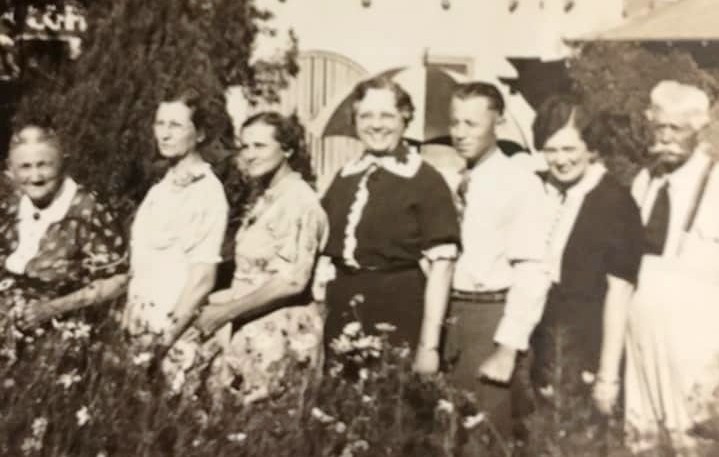
Widener Family: Ann Elizabeth, Cordelia, Arrelsy, Ellen, Travis, Johnnie and John Albert (Taken before 1952)

     This is my sweet little great-great grandmother, Ann Elizabeth Coker Widener (pictured far left) with her family. This picture was a bonus for me since it also included my great-grandmother, Arrelsy Ann, pictured third from left. I also loved seeing a photo of her siblings that I had never seen before.

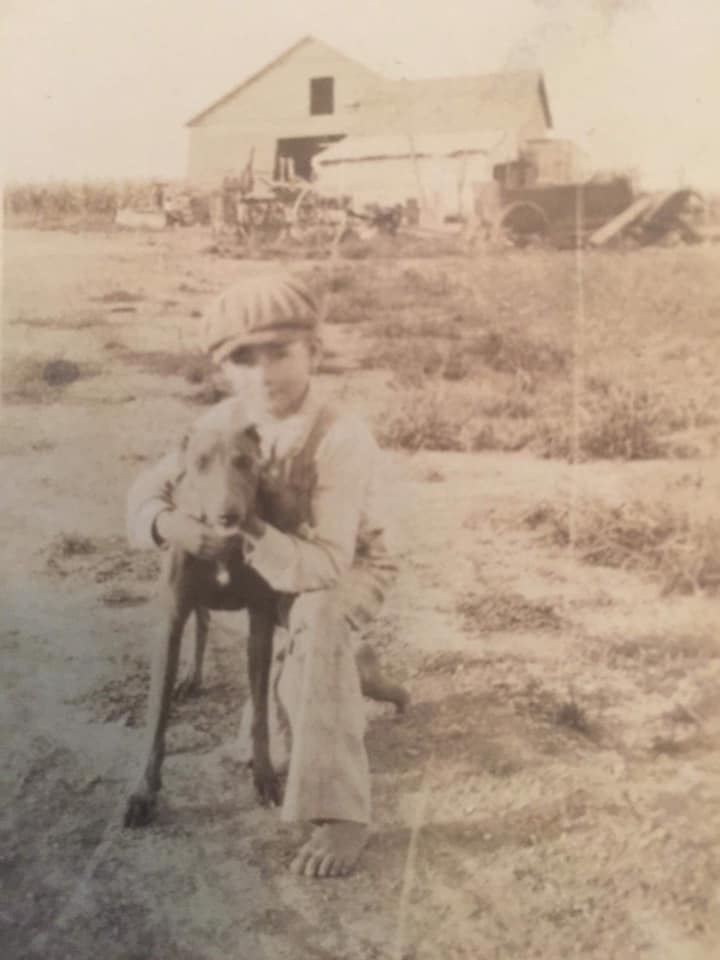
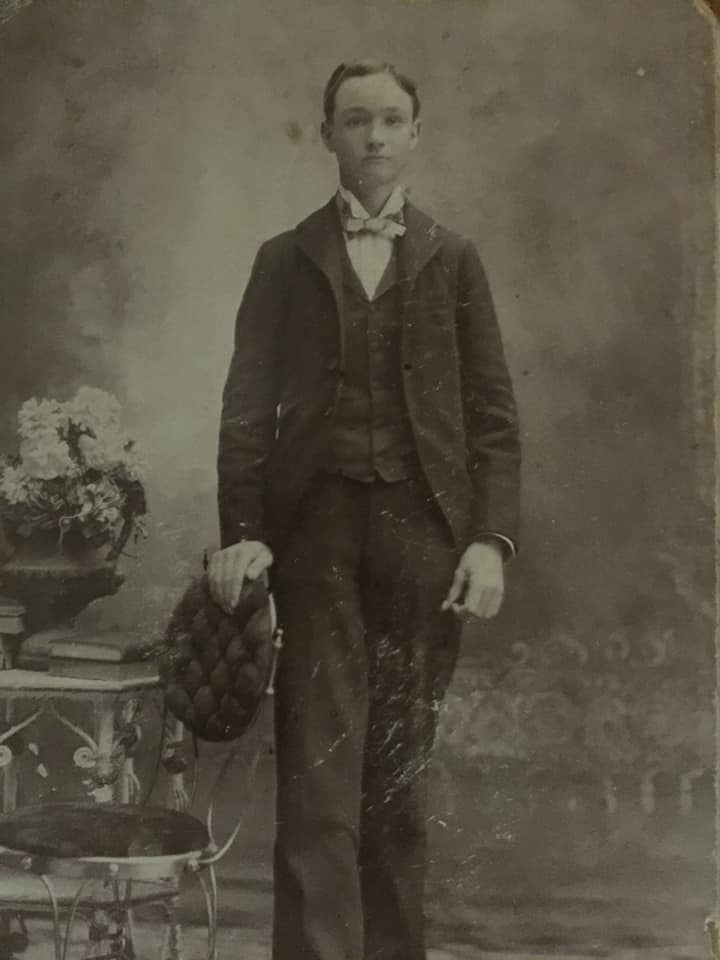
     My newly found cousin began sending more pictures that I had never seen before and I was thrilled beyond my own imaginings. She sent this precious picture of my grandfather; I was wild with delight and immediately shared it with my family.     Another cousin sent me a picture of my great-grandfather that I had never seen before either and had never seen such a young picture of him.

Lewis Albert Stafford (1920-1999)
Louis Oliver Stafford (1880-1966)

      Among the photographs she sent was of a family reunion from August 5, 1962 (pictured at the top of the page).  This was before my time but had many people pictured that I knew, including my dad when he was about 16 years old. There were many faces that I didn’t know however, so I needed to recruit help. I started our Stafford Family Facebook Group using the reunion picture as the cover photo. I added all the cousins that I had found thus far as well as my aunts, uncles, nieces, nephews, brothers, sisters and all other close family members. In order to identify each person in the group, I decided to put a number on each person so that it would be easy to keep up with.  Using the software I had (Microsoft Digital Image Suite), I began the project.

[i]

     The post was created and tagged as an announcement so that it would remain at the top of the page whenever anyone viewed it. I numbered 1-64 and began putting names beside the ones I knew for certain. Then by asking each member to identify who they knew; we were able to put a name to all but four of the faces. Those four are still a mystery, but maybe in time they will also have a name.

     In the meantime, we have filled the page with memories of past family get-togethers. I’ve enjoyed all the stories different ones have shared and will treasure having this time together if only through the internet. Perhaps one day this little family Facebook group will decide to have a real-life family reunion and if or when they do, I know that I will be there. I love my family and I treasure every moment spent with them, one way or another.

Stafford Family Reunion 1962

Shared Memories

“We played in the barn loft. I remember jumping from loft down to a feeding trough that had hay in it. We also played hide and seek in the loft, hiding behind bales of hay. We played red rover. We played outside all day. Grandma cooked big dinners every Sunday. We had fried chicken, mashed potatoes, Mac and cheese, pies, cobblers and much more.” Barbara Stafford Hendrick

“Grandma loved to cook and make pork skins outside after the big black pot was on fire. Whenever papa killed a hog, he cut up the skins and cooked it in boiling water in the big black pot outside over fire, and then fried it. That’s pork skins !!” Kay Glover

“She [grandma] was always so happy and excited when out of town family came to visit. She would be in that kitchen cooking up a storm. I remember when Aunt Johnnie and Aunt Mary came, it made her so happy. Most of the rest were weekly visitors every Sunday, so lot of cooking going on there too. Thinking back, she was in kitchen most of time but she loved all that family there. That is some of the best times of my life. Sunday playing with cousins.” Carolyn Stafford Wiley

“ I remember going to visit and Grandma would have cakes and pies sitting in the back room covered with cloths. I loved that. Also one time we came and the road to the house was muddy so either grandpa or Lewis came to get us in the tractor. Thought that was a great adventure. Then chasing guineas across the field. What fun! Sad we didn’t get to go more. Back then it was a long way!” Neta Dellinger Johnson

“We stayed the summers with her [Arrelsy Widener Stafford] after they moved.  Her hair was really long, and I would brush it for hours.” Denise Stafford

“I remember one time when Daddy and Papa [Louis Oliver Stafford] were going to kill a hog. I don’t remember Jimmy’s exact age, but young and he wanted to watch. He said “Papa is meanest man I know. He not only shot the hog in the head, but he cut his throat.” He was much braver than me. I never did watch that, but certainly enjoyed the ham and bacon.” Carolyn Stafford Wiley

“ I remember sometimes when grandpa [Louis Oliver Stafford] wanted to have chicken for dinner, he would pick out the one he wanted, then he would show it to me and Danny and give us a .22 rifle and one bullet, we had to shoot the chicken in the head so as not to mess up any of the meat. We only had one bullet so we would trail the chicken around the barnyard until we had it in just the right spot and was close enough that we felt we couldn’t miss and then we would shoot. We usually did pretty good. Before, we would just chase them until they got so tired they would just stop and we would pick them up, this worked but made the chicken very tough after it was cooked.” Jimmy Lewis Stafford, Sr.

“I remember that when I was in about the fifth grade, I stayed home from school quite a bit to help daddy [Lewis Albert Stafford] on the farm. My teacher didn’t mind really because everyone did that then. Times were hard. Also I remember when I was little, I used to like to sit on the tractor tire and pretend it was a horse. And I rode on back of the tractor with Daddy when he would be plowing and he’d talk to me a lot, teasing and stuff. He would start calling me “Albert Flinheart”. Boy that made me so mad that I’d climb right down and go to the house” Danny Wayne Stafford

 “We used to spend a lot of time at Grandma and PaPaw Stafford’s. Grandma would sometimes sit around and tell us stories. We spent a lot of time crocheting and sewing together pieces for quilt tops. A lot of times on Sundays there would be a lot of company and we would always go to grandma and papaw’s house. There would be a lot of kids and we played all day long. Papaw had nicknames for us all, he called me Sapphire, Carolyn was Chick-a-dee, Jimmy was Jimmy Crack Corn and Danny was Danny Boy. I remember Papaw always chewing gum. We would sit on his lap and he would talk to us and tell us stories.” Barbara Stafford Hendrick

“I really appreciate my parents now. When you are young you really take everything for granted. We always had a good life and had everything we ever needed or wanted. I was grown with a family of my own before I really appreciated what it took for my parents to give us the life we had” Carolyn Stafford Wiley


[i] 1. Mary Ann Stafford Sims

2. Ruth Denise Stafford

3. Karen Lemon

4. Marsha Stafford

5. Richard Michael (Mike) Akin

6. Cindy Rappe Burt

7. Linda Rappe Steininger

8. Sharon Stafford

9. Mary Elaine Akin Stafford

10. Neta Dellinger Johnson

11. Diane Kelly

12. Jr Kelly

13. Jimmy Lewis Stafford

14. Unknown

15. Brenda Sue Stafford Sharp

16. Bonnie Beth Stafford McMinn

17. Steve McMinn (Bonnie’s son)

18. Paul Langford Stafford

19. Howard Wooten Stafford

20. Mary Ellen Stafford Akin

21. Ruth Camile Stafford Geddie

22. KayLynn Stafford Glover

23. Robbie Nelda Dellinger

24. Mitchell Lemon

25. Richard Glover

26. Denise Glover Boles

27. Ersa Kelley, Jr.

28. Mary Jane Kelley

29. Janie Kelley Joiner

30. Unknown

31. Craig Lemon

32. Louis Oliver Stafford

33. Arrelsy Ann Widener Stafford

34. Agnes Arlington Stafford Kelly

35. Royce Oliver Stafford

36. Lois Ann Stafford Maxwell

37. Travis Robert “Bob” Stafford

38. Laura Lou Glover

39. Johnnie Nelda Stafford Dellinger

40. Doris Elaine Hawkins Stafford

41. Carolyn Ann Stafford Wiley

42. Barbara June Stafford Hendrick

43. Bobby Roy Stafford

44. Ronald Wiley

45. Evelyn Parten Stafford

46. Donnie Louise Jacobs Widener

47. Marie Elaine Johnson Kelley

48. Travis Widener’s 2nd wife Anne

49. Travis Widener

50. Susie Rappe Holder

51. Willie Mae Kelley Rappe

52. Mary Lou Murphy Stafford

53. Leona Stafford

54. Kitty Stafford

55. Richard Stafford

56. Unknown

57. Unknown

58. Milton Pratt Stafford

59. Ersa Kelley, Sr.

60. Jim Rappe

61. Dick Akin

62. Lloyd Kelley

63. Robert Dellinger

64. Travis Forrester Widener

David Carter, Revolutionary War Soldier

Independent
Week #27 of Amy Johnson Crow’s
52 Ancestors in 52 Weeks Series

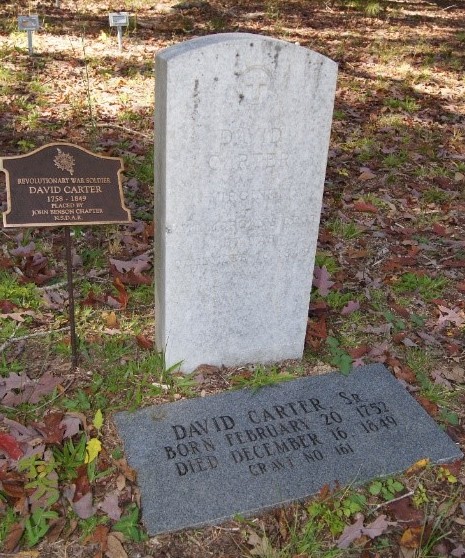
This week’s prompt is “Independent” and as Independence Day is approaching, I decided to write about my first NSDAR proven Revolutionary War Patriot, David Carter, who fought to make America an Independent nation.

headstone

(Grave marked by the Daughter’s of the American Revolution)


David Carter was born in East Orange, Essex County, New Jersey in 1758.[1] His parentage has not yet been verified. Several family trees that I have come across online have recorded him as being the son of Solomon Carter of Duplin County, North Carolina. This may be due to  a probate record for Solomon Carter listing a David Carter as an heir .[2]  The connection between this Solomon Carter and my ancestor David Carter is disproven according to the DAR database[3] listing this particular Solomon Carter with a son David whose birthdate is listed as 1775 and a death date of 1840 in Tishomingo Co MS. This does not match my ancestor, David Carter’s birth or death information. A guardianship record[4]  from a New Jersey Abstract of Wills dated 6 May 1772, states, “David and Stephen Carter, sons of Benjamin Carter request their guardian to be Samuel Potter”. According to the date for David Carter’s birth in 1758, would make him 14 years old at the time of this record. Further research is needed in order to either establish that Benjamin Carter is the father of my ancestor, David Carter, or to disprove it.

David moved from New Jersey to Pennsylvania and then to Monogalia County, Virginia (what is now West Virginia) arriving around 1770.[5]  This was known as the Ohio Valley.

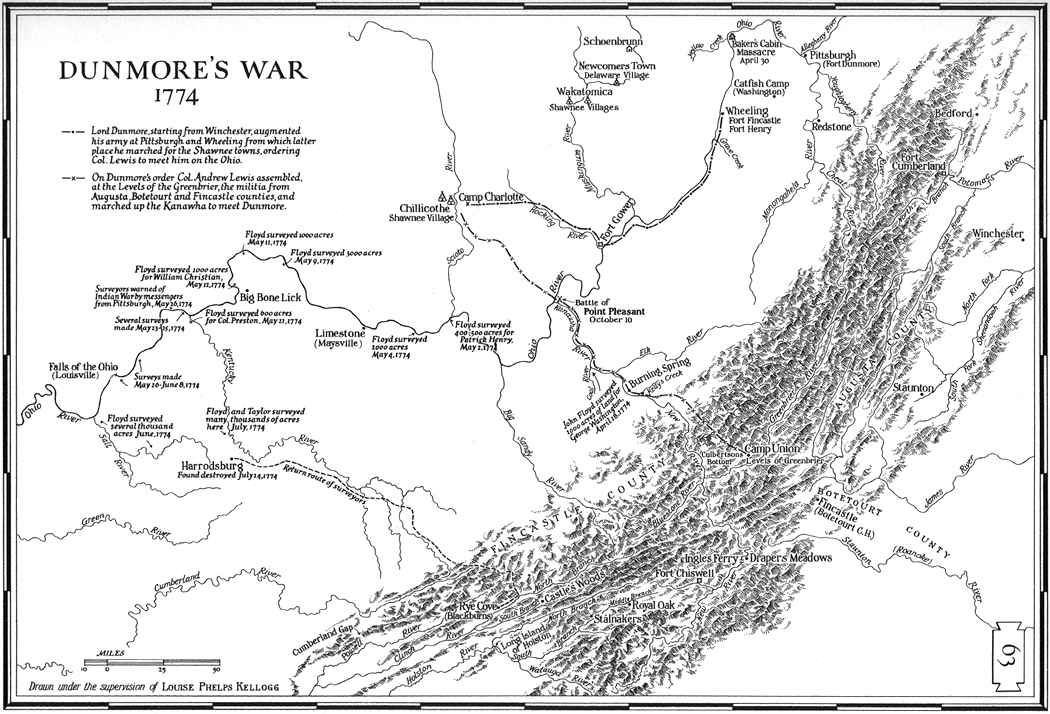
“The Ohio Valley was the key to the possession of the continent. The ten years of comparative peace following the close of the French and Indian War disclosed a continual movement from eastern Virginia to western Virginia, and a like movement down along the Ohio River from the Pittsburgh entrance. The old line of defense fell more or less into disuse. Then came the hectic days of 1774, and a new outbreak between the settlers and the Indians, called Dunmore’s War, of which the most important episode was the Battle of Point Pleasant. A new line of defense was then developed, running from Fort Pitt, and “old Fort Redstone,” following generally the Monongahela and West Fork of the Monongahela, and the Ohio Valley, together with the regions along the Great Kanawha as far west as Maysville, Kentucky. In western Virginia there then sprang up a long series of forts, stockades, and blockhouses, located at strategic points to safeguard the pioneer settlers in this region.”[6]

     His first military service was in Monogalia County, Virginia[7] where he is shown to be a private serving three months in the fall of 1774 and one month in the spring of 1775 under Colonels Morgan and Lewis.  This was the time during which Dunmore’s War took place.  Dunmore’s War was a confrontation between Virginia and the American Indians of Ohio Country.[8]

dunmores war

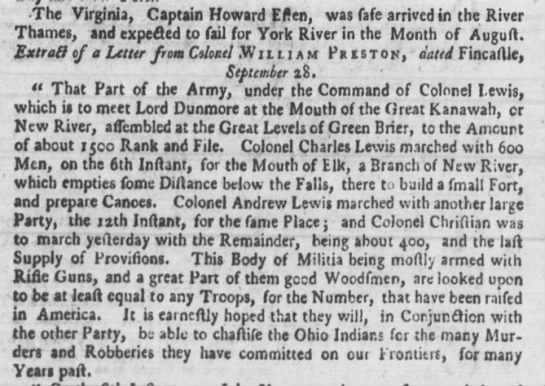
“In August 1774, Pennsylvania militia entered the Ohio Country and quickly destroyed seven Seneca-Cayuga villages, which the Seneca-Cayuga had abandoned as the soldiers approached. At the same time, Lord Dunmore sent one thousand men to the Kanawha River in modern-day West Virginia to build a fort and to attack the Shawnee. Cornstalk, who had experienced a change of heart toward the white colonists as the soldiers invaded the Ohio Country, sent nearly one thousand warriors to drive Dunmore’s force from the region. The forces met on October 10, 1774, at what became known as the Battle of Point Pleasant. After several hours of intense fighting, the British drove Cornstalk’s followers north of the Ohio River. Dunmore, with a large force of his own, quickly followed the Shawnee across the river into the Ohio Country. Upon nearing the Shawnee villages on the Pickaway Plains north of modern-day Chillicothe, Ohio, and near what is now Circleville, Ohio, Dunmore stopped. From his encampment named Camp Charlotte, Dunmore requested that the Shawnee come to him and discuss a peace treaty. The Shawnee agreed, but while negotiations were under way, Colonel Andrew Lewis and a detachment of Virginia militia that Dunmore had left behind at Point Pleasant crossed the Ohio River and destroyed several Shawnee villages. Fearing that Dunmore intended to destroy them, the Shawnees immediately agreed to terms before more blood was shed.”[9]

newspaper

(Clipping from The Virginia Gazette Williamsburg, Virginia 13 Oct 1774, Thu  •  Page 2)

David Carter sees his next service in the spring of 1778 for four months “where he was kept out scouting after the Tories”[10]  and in the summer of 1780, both times under Captain Martin and Major Lewis in North Carolina.

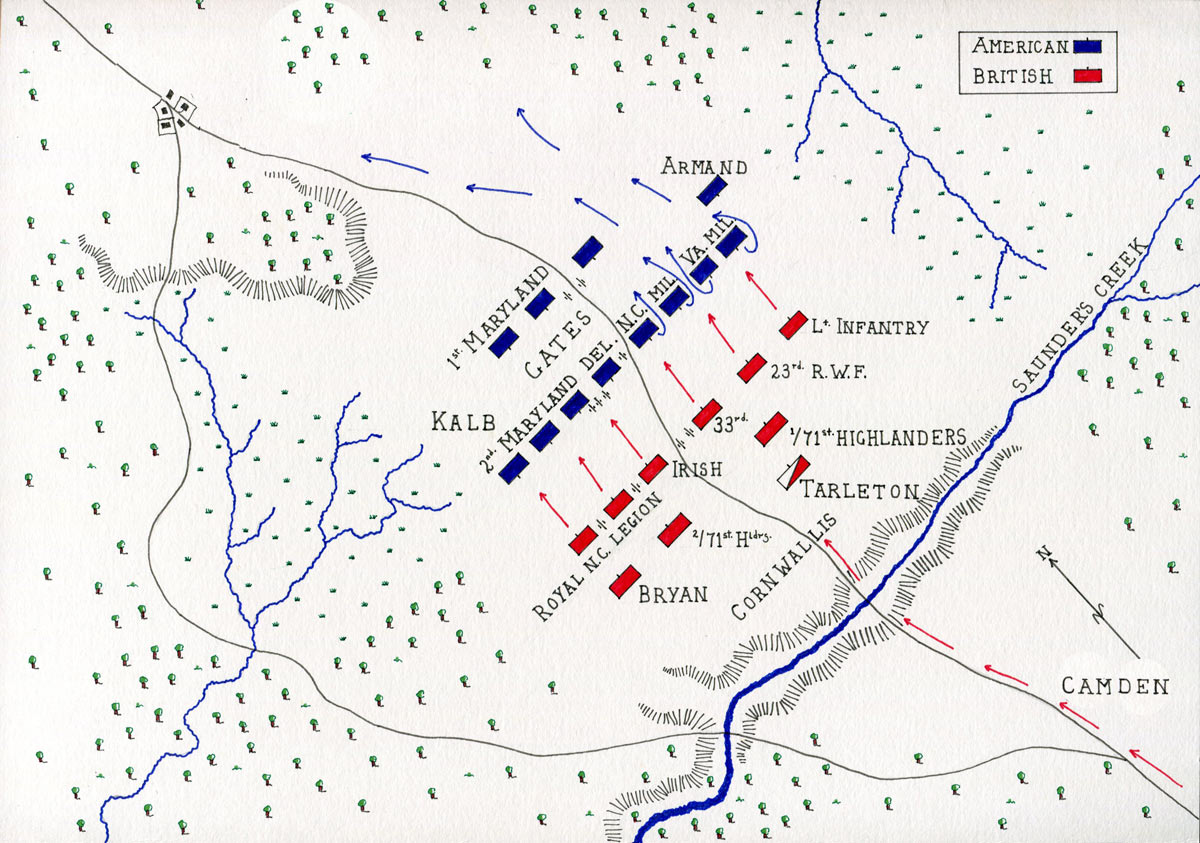
On August 16, 1780, the Battle of Camden erupted. David Carter was part of the North Carolina Militia under General Griffith Rutherford. The militia defended their positions gallantly but was forced to retreat with heavy losses. General Griffith Rutherford was captured[11] along with several of his militia including David Carter.[12]

camden

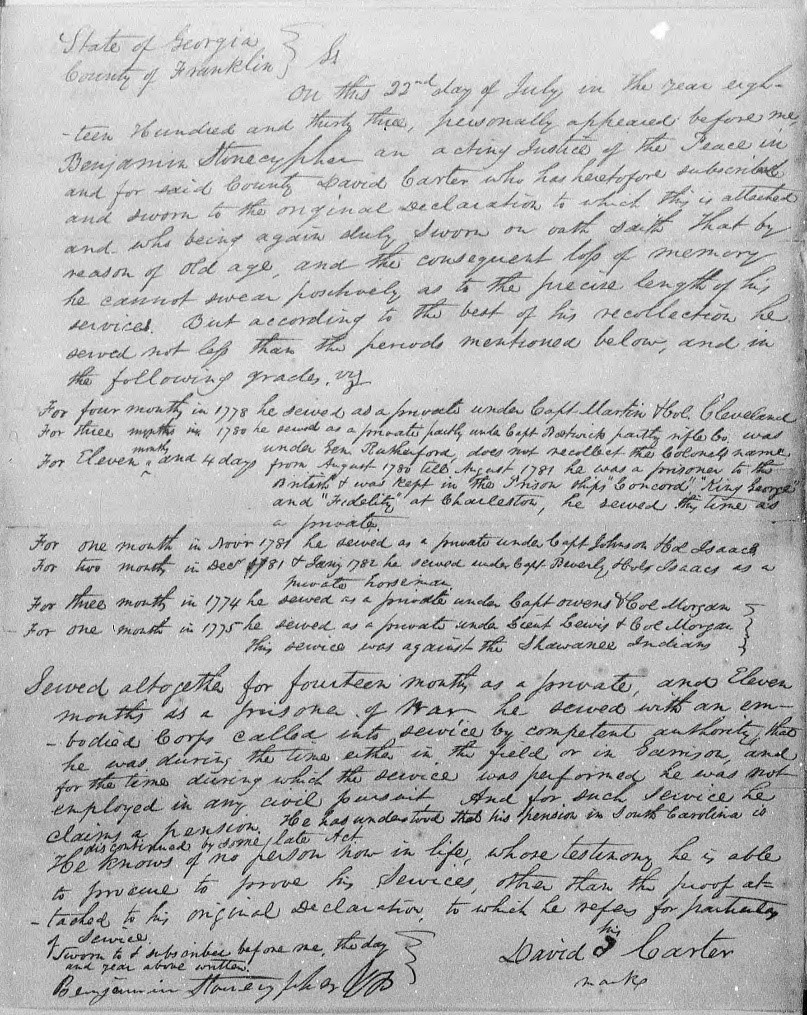
The prisoners taken from the Battle of Camden were housed aboard prison ships anchored in various places in Charleston harbor in South Carolina[13].  David Carter stated in his military pension application that he was held “in the prison ships eleven months and four days”.[14]  He was kept on the prison ships Concord, King George and Fidelity.[15]

pension

After almost a year of being a prisoner, he was carried to Jamestown, Virginia where he was exchanged in August 1781.[16] After being exchanged, “he returned home after a total service of fifteen months during this campaign”.[17]   He took up arms once again in November and December 1781 under Colonel Isaacs[18] fighting in several more skirmishes before the end of the war.

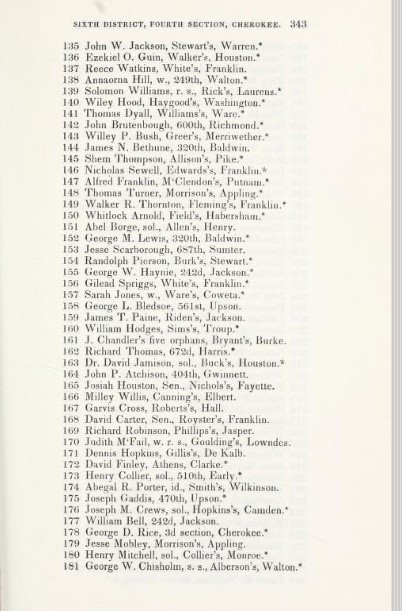
Sometime before 1787, David Carter married Mehitable Cobb[19]. Their son Micajah Carter was born on 30 May 1787 in Pendleton District, South Carolina.[20]  David Carter’s family is listed in the 1790 U.S. Federal Census living in Pendleton, South Carolina with one white male age 16 and over, two white males under age 16, 4 white females and twenty-three slaves[21].  Between 1820 and 1830, David Carter moved with his family to Franklin County, Georgia.[22]  He received land through the Cherokee Land Lottery in 1832.[23]  David was “allowed two draws under the condition of being a veteran of Revolutionary War”[24]

land lottery

(Cherokee Land Lottery by James F. Smith pg. 343 line 168)

The 1840 census shows his home listed in Elbert County, Georgia[25] living in a household with two females, one of which is most likely his wife as she did not die until between 1848-1849 [According to records from the old family Bible of James M. Carter].  At the time of his death in 1849, he was residing at the home of his son, Micajah Carter, in Franklin County, Georgia[26]. He passed away at the age of 91 years on 16 December 1849 of dyspepsia[27] . He was originally buried in Mt. Zion Methodist Church Cemetery but because of construction of the Hartwell Dam and Lake in 1960, his remains were moved to New Harmony Church Cemetery.[28]

I feel as though there is still so much to learn about my Revolutionary War ancestor. To have been taken prisoner and kept in the bottom of a filthy, rocking ship for almost a year must have been quite a hardship. He not only overcame the odds and survived the battles he fought, being a prisoner constantly surrounded by death and sickness on a daily basis, living off scant rations and dodging all the diseases that ran rampant during his imprisonment; but went back to fight more battles until the end of the war, until he saw victory and freedom. When we look at the records of our ancestors, we really can’t get a feeling for what type of character they had. I have learned one thing about my ancestor, David Carter; he was a fighter. He didn’t give up or give in. We owe our American Independence to men like this. To all the men and women who stood up for our rights and our freedom and for those who stand today and serve in our armed forces,  I salute you and I thank you!!

photo of fireworks display
Photo by Designecologist on Pexels.com

[1] U.S. Revolutionary War Pension and Bounty-Land Warrant Application Files 1800-1900; Carter, David S16335; pension year 1833 state of Georgia; archive publication number M804; archive roll 483; Records of the Department of Veterans Affairs, Record Group 15. National Archives, Washington, D.C. imaged at Ancestry (https://www.ancestry.com); 2007; Provo, UT, USA pg. 555-578; [accessed 4 July 2019]

[2] Wills and Estate Papers (Duplin County), 1663-1978; Author: North Carolina Division of Archives and History (Raleigh, North Carolina); Probate Place: Duplin, North Carolina; Solomon Carter, probate date 1809, Wills and Estate Papers; Ancestry [database on-line]. Provo, UT, USA: Ancestry.com Operations, Inc., 2015 (https://www.ancestry.com) ;North Carolina County, District and Probate Courts; [accessed 4 July 2019]

[3]Daughters of the American Revolution, “Ancestor Database.” database, Genealogical Research System (http://services.dar.org/public/dar_research/ : [accessed 4 July 2019]), [Carter, Solomon, A020064].

[4] New Jersey State Archives. New Jersey, Published Archives Series, First Series. Trenton, New Jersey: John L Murphy Publishing Company; David Carter, 6 May 1772, Essex, New Jersey, United States; Images [online database] Ancestry (https://www.ancestry.com) New Jersey, Abstract of Wills, 1670-1817 [accessed 4 July 2019]. Provo, UT, USA: Ancestry.com Operations, Inc., 2011.

[5] Biographical Sketch by Homer Hamilton Hall; Information shared on Ancestry (https://www.ancestry.com) [accessed 4 July 2019] member name hhhall11 ; family tree name: Hall Family Genealogy_2010-05-15 (https://www.ancestry.com/family-tree/person/tree/18062547/person/598791085/facts)

[6] West Virginia Dept of Arts, Culture and History; West Virginia History; Publication of West Virginia Archives and History; Virginia Frontier Defenses 1719-1795 by Roy Bird Cook; Vol. 1 No. 2 Jan 1940 pg. 119-130; http://www.wvculture.org/history/journal_wvh/wvh1-2-4.html; [accessed 4 July 2019]

[7]   U.S. Revolutionary War Pension and Bounty-Land Warrant Application Files 1800-1900; Carter, David S16335; pension year 1833 state of Georgia; archive publication number M804; archive roll 483; Records of the Department of Veterans Affairs, Record Group 15. National Archives, Washington, D.C. imaged at Ancestry (https://www.ancestry.com); 2007; Provo, UT, USA pg. 555-578; [accessed 4 July 2019]

[8] Ohio History Central; Lord Dunmore’s War and the Battle of Point Pleasant; www.ohiohistorycentral.org; accessed on 4 July 2019

[9] ibid

[10]   U.S. Revolutionary War Pension and Bounty-Land Warrant Application Files 1800-1900; Carter, David S16335; pension year 1833 state of Georgia; archive publication number M804; archive roll 483; Records of the Department of Veterans Affairs, Record Group 15. National Archives, Washington, D.C. imaged at Ancestry (https://www.ancestry.com); 2007; Provo, UT, USA pg. 555-578; [accessed 4 July 2019]

[11] Encyclopedia of North Carolina; North Carolina Press 2006; The Battle of Camden; Denis Isenbarger; https://www.ncpedia.org/camden-battle; [accessed 4 July 2019]

[12]   U.S. Revolutionary War Pension and Bounty-Land Warrant Application Files 1800-1900; Carter, David S16335; pension year 1833 state of Georgia; archive publication number M804; archive roll 483; Records of the Department of Veterans Affairs, Record Group 15. National Archives, Washington, D.C. imaged at Ancestry (https://www.ancestry.com); 2007; Provo, UT, USA pg. 555-578; [accessed 4 July 2019]

[13]Borick, Carl P.  Relieve Us of This Burthen: American Prisoners of War in the Revolutionary South, 1780-1782; Columbia, South Carolina; University of South Carolina Press 1966

[14] U.S. Revolutionary War Pension and Bounty-Land Warrant Application Files 1800-1900; Carter, David S16335; pension year 1833 state of Georgia; archive publication number M804; archive roll 483; Records of the Department of Veterans Affairs, Record Group 15. National Archives, Washington, D.C. imaged at Ancestry (https://www.ancestry.com); 2007; Provo, UT, USA pg. 555-578; [accessed 4 July 2019]

[15] ibid

[16] ibid

[17] ibid

[18] ibid

[19] Daughters of the American Revolution, “Ancestor Database.” database, Genealogical Research System (http://services.dar.org/public/dar_research/ : [accessed 4 July 2019], Carter, David, A A019903

[20] ibid

[21] First Census of the United States, 1790 (NARA microfilm publication M637, 12 rolls). Records of the Bureau of the Census, Record Group 29. National Archives, Washington, D.C.; Year: 1790; Census Place: Pendleton, South Carolina; Series: M637; Roll: 11; Page: 5; Image: 18; Family History Library Film: 0568151; Ancestry.com. 1790 United States Federal Census [database on-line]. Provo, UT, USA: Ancestry.com Operations, Inc., 2010. Images reproduced by FamilySearch; [accessed 4 July 2019]

[22] Fifth Census of the United States, 1830. (NARA microfilm publication M19, 201 rolls). Records of the Bureau of the Census, Record Group 29. National Archives, Washington, D.C.; 1830; Census Place: Franklin, Georgia; Series: M19; Roll: 17; Page: 245; Family History Library Film: 0007037; Ancestry [database on-line]. Provo, UT, USA: http://www.ancestry.com, 2010. [accessed 4 July 2019]

[23] The Cherokee land lottery, containing a numerical list of the names of the fortunate drawers in said lottery, with an engraved map of each district. By James F. Smith; Publication date 1838

[24] Georgia Archives University System of Archive (https://www.georgiaarchives.org/research/1832_land_lottery); Georgia Archives, 5800 Jonesboro Road, Morrow, GA  U.S.A. ; 2019 [accessed 5 July 2019]

[25] Sixth Census of the United States, 1840. (NARA microfilm publication M704, 580 rolls). Records of the Bureau of the Census, Record Group 29. National Archives, Washington, D.C.; Year: 1840; Census Place: Elbert, Georgia; Roll: 40; Page: 162; Family History Library Film: 0007043; Ancestry (http://www.ancestry.com)  1840 United States Federal Census [database on-line]. Provo, UT, USA, 2010.  [accessed 4 July 2019]

[26] Seventh Census of the United States, 1850; (National Archives Microfilm Publication M432, 1009 rolls); Records of the Bureau of the Census, Record Group 29; National Archives, Washington, D.C.; Year: 1850; Census Place: District 32, Franklin, Georgia; Roll: M432_70; Page: 306B; Image: 143; Ancestry online database (https://www.ancestry.com); Provo, UT, USA, 2009 [accessed 4 July 2019]

[27] Federal Mortality Census Schedules and Related Indexes, 1850-1880. T655, 30 rolls. National Archives and Records Administration, Washington D.C.; National Archives and Records Administration (NARA); Washington, D.C.; Archive Roll Number: 7; Census Year: 1849; Census Place: Militia District 32, Franklin, Georgia; Page: 213; Ancestry [online database] (https://www.ancestry.com); Provo, UT, USA, 2010 [accessed 4 July 2019]

[28] Find A Grave, database and images (https://www.findagrave.com) [ accessed 05 July 2019], memorial page for David Carter, Sr (20 Feb 1752–16 Dec 1849), Find A Grave Memorial no. 25915432, citing New Harmony Methodist Church Cemetery, Reed Creek, Hart County, Georgia, USA.